Birch vs Bamboo vs Poplar: The Ultimate Wood Selection Guide for Disposable Cutlery
Which Wood Should You Choose for Your Disposable Cutlery?
If you have spent any time sourcing disposable wooden cutlery, you have probably run into the same wall every buyer hits eventually: three material names — birch, bamboo, poplar — and no clear answer on which one actually fits your product.
Suppliers will often tell you their material is "the best" — which is not much help when you are the one explaining that choice to a retail buyer, or handling a complaint if the spoons feel wrong in someone's hand. This guide sets the marketing language aside to answer the real question: which material actually fits your product, your customers, and your sourcing priorities — not which one a factory wants to sell you more of.
The short answer: there is no single "best" material for every application. The right choice depends on strength, hardness, surface feel, appearance, processing requirements, intended use, sustainability goals, and your own purchasing specifications. Birch tends to offer the most balanced combination of rigidity and smoothness for general foodservice use. Bamboo brings a fast-renewing resource and a distinctive natural grain. Poplar is lighter, softer, and easier to process, which suits certain cost-sensitive or lightweight applications well. The rest of this guide walks through exactly when each one makes sense.
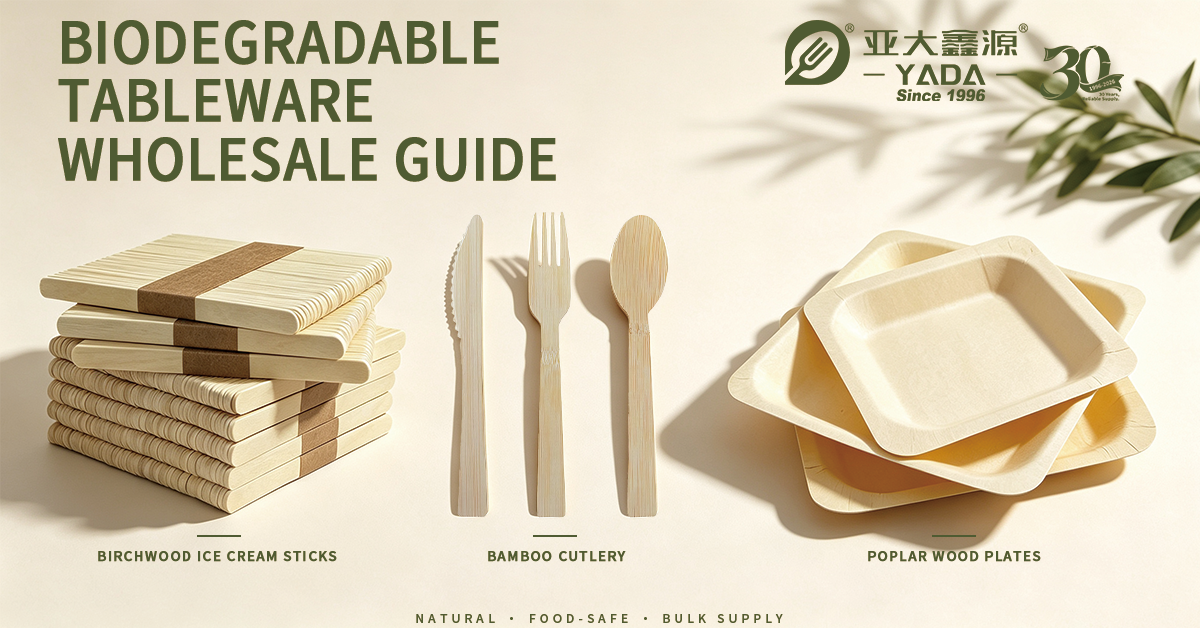
Birch vs Bamboo vs Poplar at a Glance
Before going deeper, here is where each material tends to land.
| Feature | Birch | Bamboo | Poplar |
|---|---|---|---|
| Material type | Hardwood | Grass | Hardwood |
| Density / hardness | Medium-high | Medium-high | Lower |
| Strength | High | High | Moderate |
| Surface feel | Smooth | Smooth | Soft, light |
| Appearance | Light, uniform | Natural visible grain | Pale, subtle grain |
| Processing | Excellent consistency | Requires specific processing know-how | Easy to process |
| Typical products | Spoons, forks, knives, ice cream sticks | Cutlery, stirrers, skewers | Lightweight disposable products |
| Best suited for | Premium & general foodservice | Sustainability-forward positioning | Cost-sensitive, light-duty use |
Keep in mind: a table like this is a starting point, not a verdict. How a factory dries, cuts, and finishes the material often matters as much as the species itself — more on that later.
Material Properties by the Numbers
"Medium-high density" and "high strength" are useful for a quick read, but they do not hold up if you need to justify a material choice with data — to a retail buyer, a compliance team, or your own spec sheet. Here are the physical properties buyers most often ask about:
| Property | Birch | Bamboo | Poplar |
|---|---|---|---|
| Janka hardness (lbf) | ~1,260 | ~1,380 | ~540 |
| Density (g/cm³) | ~0.62 | ~0.65–0.70 | ~0.42 |
| Standard moisture content | 8–12% | 8–12% | 8–12% |
These figures reflect typical published ranges for each species; actual values shift with growing region, processing method, and product thickness. Ask your supplier for lab-tested figures on your specific batch before finalizing a spec — see the ordering checklist below for what documentation to request.
In plain numbers: birch measures roughly 1,260 lbf on the Janka hardness scale at a density of about 0.62 g/cm³, bamboo roughly 1,380 lbf at 0.65–0.70 g/cm³, and poplar roughly 540 lbf at 0.42 g/cm³. Bamboo and birch are close in hardness, while poplar is noticeably lighter and softer.
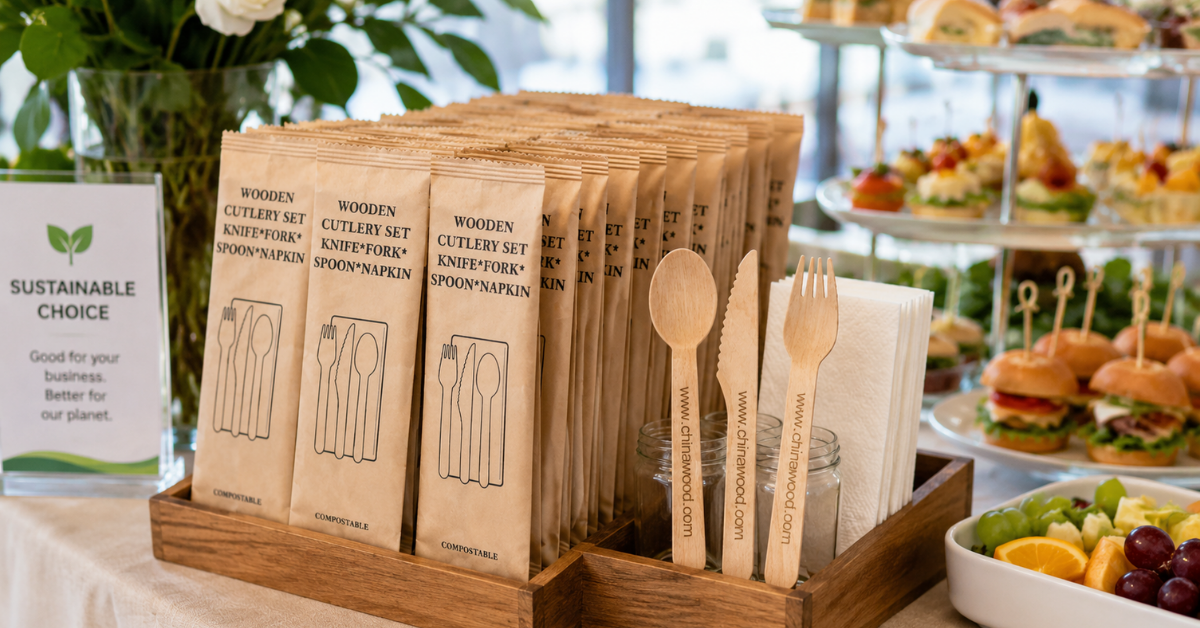
What Makes Birch, Bamboo and Poplar Different?
Birch — A Reliable Hardwood for Everyday Foodservice
Birch is a hardwood with a relatively uniform grain, which is part of why it has become such a common choice for wooden spoons, forks, knives, and ice cream sticks. It holds its shape well under pressure, takes a smooth finish, and behaves consistently across large production runs — something that matters a lot when you are ordering hundreds of thousands of units and need every batch to feel the same.
Real-world scenario: Picture a frozen dessert brand shipping pints internationally: the spoon rides in a cold truck for days, sits in a distribution center, and finally reaches a customer's home freezer weeks later. If the wood softens, warps, or splinters anywhere along that journey, the complaint lands on the brand's page, not the factory's. A boutique ice cream label sourcing spoons for cold-chain retail distribution needs a material that stays rigid and splinter-free after days of temperature swings, not just in a supplier's lab test.
If you are a buyer looking for a dependable, all-around material that balances strength, smoothness, and appearance without asking you to compromise on any one of them — birch is usually the safe, well-tested choice.
Bamboo — Fast-Renewing, with Its Own Character
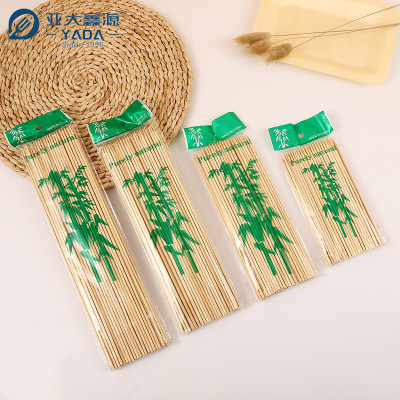
Bamboo is not technically a tree at all — it is a grass, and one that regrows remarkably fast compared with hardwood species. That rapid regrowth is why bamboo carries such a strong sustainability story, and its natural fiber structure gives it real strength for stirrers, skewers, and cutlery.
Real-world scenario: Picture a DTC brand launching a "plastic-free" product line built around sustainability messaging, and a customer emails asking exactly where the bamboo was grown and whether it is certified. If the only answer available is "bamboo is renewable" with no paperwork behind it, that conversation gets uncomfortable fast — and the brand's credibility takes the hit, not the factory's. A sustainability-focused dessert or coffee brand promising "plastic-free, plant-based" packaging needs a bamboo supplier who can back that claim with real sourcing documentation, not just an appealing product photo.
One honest note worth flagging: fast growth alone does not automatically make a product "more sustainable." Responsible sourcing, how efficiently the raw material is processed, how far it travels, and how long the finished product lasts in use all factor into the real environmental picture. A buyer who understands this distinction is better equipped to ask suppliers the right follow-up questions — and better protected against sourcing claims that sound good but do not hold up.
If you are a buyer looking for a renewable material with a distinctive natural grain and a genuine sustainability narrative to tell your own customers — bamboo is worth serious consideration, provided your supplier can back up the sourcing claims.
Poplar — Lightweight and Easy to Work With
Poplar is a lightweight hardwood, softer than birch, with a pale, subtle grain. It is easier to process, which can translate into cost efficiency for certain product types. It is not the material to reach for when you need maximum hardness, but for lighter-duty, cost-sensitive applications, it can be a genuinely practical option rather than a compromise.
Real-world scenario: Picture a caterer supplying disposable cutlery for a season of outdoor events — thousands of units per event, tight margins, and no room for a shipment that turns out too fragile mid-service. Going cheap on material without checking actual moisture control and finishing can mean cutlery that snaps in front of a paying guest. A caterer ordering high volumes for one-time events on a tight budget genuinely benefits from poplar's lower cost, provided the factory's processing keeps it sturdy enough for the job.
If you are a buyer looking for a lower-cost, easy-to-process option for applications where extreme rigidity is not the top priority — poplar deserves a place on your shortlist.
Key Performance Comparison: What Actually Matters When You Are Buying
1. Hardness and Strength
Birch and bamboo both offer high strength and are generally the go-to choices when a product needs to hold up under pressure — think forks that need to pierce food, or knives that need a stable cutting edge. Poplar is more moderate in strength, which is fine for lighter applications but worth weighing carefully if your product will see heavier use.
One thing buyers sometimes overlook: the raw material is only part of the equation. Thickness, shape, moisture control, and finishing during manufacturing all affect how strong the finished product actually feels in someone's hand. Two suppliers using identical birch stock can still ship products with noticeably different strength — which is exactly why it pays to ask about a factory's process, not just its material list.
Real-world scenario: Think about a food truck during a lunch rush — dozens of orders a minute, forks going straight into grilled meat or dense rice bowls, with no time for anyone to double-check quality before handing it over. If a fork's tines snap on the first bite, the complaint is not really about the wood species — it is about the brand standing behind it. A fast-casual restaurant serving hearty, texture-heavy dishes during peak hours needs cutlery that holds up to real pressure, not just gentle handling.
2. Surface Smoothness and Mouthfeel
For anything that touches a customer's mouth, this is one of the most important — and most under-discussed — factors in the whole sourcing decision. Birch and bamboo both finish smooth when processed properly, while poplar has a softer, lighter feel. Splinter risk, edge finishing, and overall surface texture directly affect how a customer experiences your product, and a bad first impression here is hard to undo.
The honest takeaway: proper manufacturing and polishing matter just as much as which species you chose in the first place. A well-finished poplar product can outperform a poorly finished birch one.
Real-world scenario: Imagine a children's meal kit brand shipping thousands of spoons a month — it only takes one splinter complaint from a parent, posted publicly, to undo months of careful branding. Smoothness is not a nice-to-have in a case like this; it is a liability question. A brand selling directly to families with young children cannot treat surface finishing as an afterthought, because the tolerance for even a single bad unit is close to zero.
3. Color and Natural Appearance
- Birch — light, clean, and relatively uniform in tone, which reads as polished and premium.
- Bamboo — visible natural grain, giving it a more distinctive, organic look.
- Poplar — pale with a softer visual character, well suited to minimalist packaging.
If you are building a premium foodservice brand, birch's uniformity often supports that positioning. If your brand leans into natural, eco-conscious messaging, bamboo's visible grain does a lot of that storytelling for you before a customer even reads your label.
Real-world scenario: Picture a boutique dessert shop building its whole identity around a clean, Instagram-ready unboxing moment — inconsistent spoon color or visible blemishes in a batch would clash with everything else the brand is trying to say. A premium dessert or gifting brand investing heavily in packaging design needs the cutlery itself to look as considered as the box it comes in.
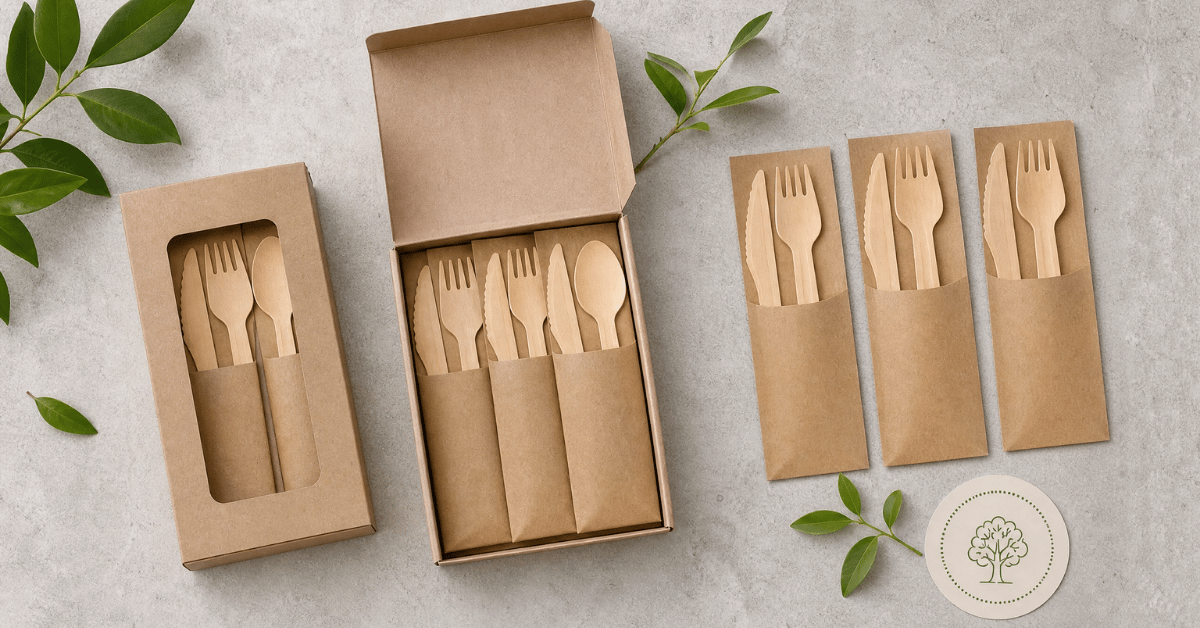
4. Processing and Manufacturing
Cutting, shaping, drying, polishing, and quality control all vary across the three materials — and this is precisely where the manufacturer you choose starts to matter more than the material itself. A factory with strong process control can get consistent, high-quality results from any of the three; a factory without it can turn even premium birch into an inconsistent product.
Real-world scenario: Consider a large ice cream stick buyer running automated dispensing lines at high speed — even a slight size inconsistency between batches can jam the machine and stop the entire production run. A manufacturer supplying automated dispensing equipment needs dimensional consistency batch after batch, because a single oversized stick can cost an afternoon of downtime.
5. Sustainability and Responsible Sourcing
This is worth its own honest conversation, because it is the area where buyers are most often oversold.
It is tempting to rank sustainability simply as "bamboo first, then wood" — but that oversimplifies things. Renewable resource status matters, but so does responsible forestry, FSC chain-of-custody certification where relevant, traceability, processing efficiency, production waste, packaging, and transportation. A birch product from a well-managed, certified forest with efficient processing can have a smaller real-world footprint than a bamboo product with a longer, less controlled supply chain.
Real-world scenario: Picture a retailer preparing for an EU Packaging and Packaging Waste Regulation (PPWR) compliance audit, where a compliance officer asks for full supply-chain documentation — not just a species name on a spec sheet. A European retailer facing tightening packaging regulation needs a paper trail covering sourcing, certification, and processing, because "it's bamboo, so it's fine" will not satisfy an actual audit.
Bottom line for buyers: evaluate sustainability across the entire supply chain — not based on material type alone. Ask your supplier for certification documents, not just claims.
Which Material Is Best for Disposable Spoons?
This is one of the most common questions we hear from buyers, so here is a direct answer.
Quick answer: for most buyers, birch offers the strongest balance of rigidity, smoothness, and appearance; bamboo offers a distinctive renewable-material story; poplar is a practical option for lighter-duty needs.
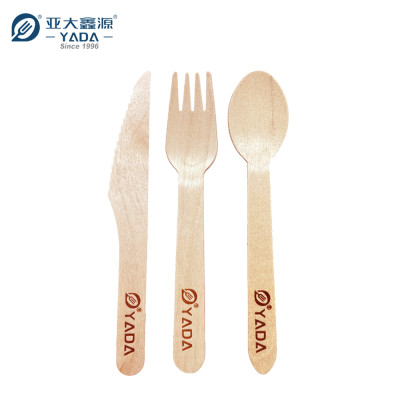
- Birch works well for ice cream, desserts, catering, and general foodservice — anywhere you need reliable rigidity plus a smooth, premium feel. See our wholesale wooden spoons for an example of birch in action.
- Bamboo is a strong fit if your brand is built around sustainability messaging, or if you want a more distinctive, natural look on the shelf.
- Poplar makes sense for lightweight, cost-sensitive projects where a slightly lower hardness is an acceptable trade-off for a better price point.
Choosing the Right Material for Different Products
- Wooden Spoons — All three materials work here, and the right pick usually comes down to the priorities above: rigidity and finish (birch), natural appearance and sustainability story (bamboo), or cost efficiency (poplar).
- Wooden Forks — Tine strength and break resistance matter most, which is why birch and bamboo are the more common choices — a fork that snaps mid-use is a fast way to lose customer trust.
- Wooden Knives — Cutting edge stability and overall hardness make birch and bamboo the more dependable options for knives specifically.
- Ice Cream Spoons and Sticks — Length, thickness, smoothness, and dimensional consistency all matter here — especially if your production line uses automated dispensing equipment, where even small size variations can cause jams. Birch and bamboo tend to hold consistent dimensions well across large runs.
- Coffee Stirrers — Stiffness and diameter consistency are the deciding factors for machine compatibility, and both birch and bamboo perform reliably here.
Decision Matrix: Matching Material to Priority
| Your Priority | Recommended Material |
|---|---|
| High rigidity | Birch / Bamboo |
| Smooth, premium feel | Birch |
| Renewable-material story | Bamboo |
| Lightweight product | Poplar |
| Visible natural grain | Bamboo |
| Uniform, clean appearance | Birch |
| Cost-sensitive application | Poplar |
| Ice cream sticks / spoons | Birch / Bamboo |
| Coffee stirrers | Birch / Bamboo |
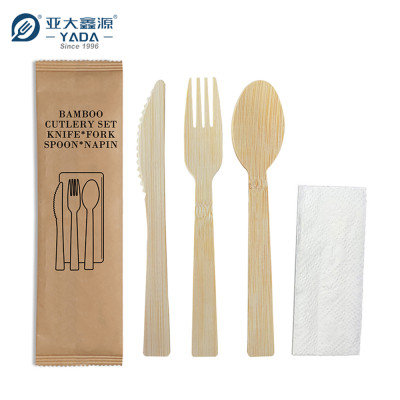
| General disposable cutlery | Birch / Bamboo |
"Recommended" here is deliberate — a strong starting point, not an absolute rule. Your product spec and manufacturing partner still shape the final outcome.
What to Confirm Before You Place an Order
Whichever material you land on, a few checks up front can save you a lot of trouble later:
- Material — Birch, bamboo, or poplar, confirmed in writing on the spec sheet.
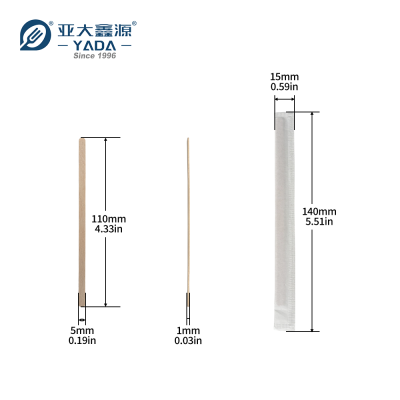
- Product dimensions — Length, width, thickness, and acceptable tolerance.
- Surface finish — Smoothness standard, polishing method, splinter control.
- Moisture control — How moisture is managed during production and storage, since this affects both strength and shelf stability.
- Food-contact compliance — What standards apply, and what documentation the supplier can actually provide.
- Sustainability certification — FSC or equivalent, where relevant to your market.
- Packaging — Bulk, wrapped, bundled, or individually packed.
- OEM / private label — Logo placement, custom packaging, and any specification adjustments.
- MOQ and production capacity — Whether the factory can realistically meet your volume and timeline.
- Sample approval — Always confirm samples before committing to mass production, no matter how good the spec sheet looks.
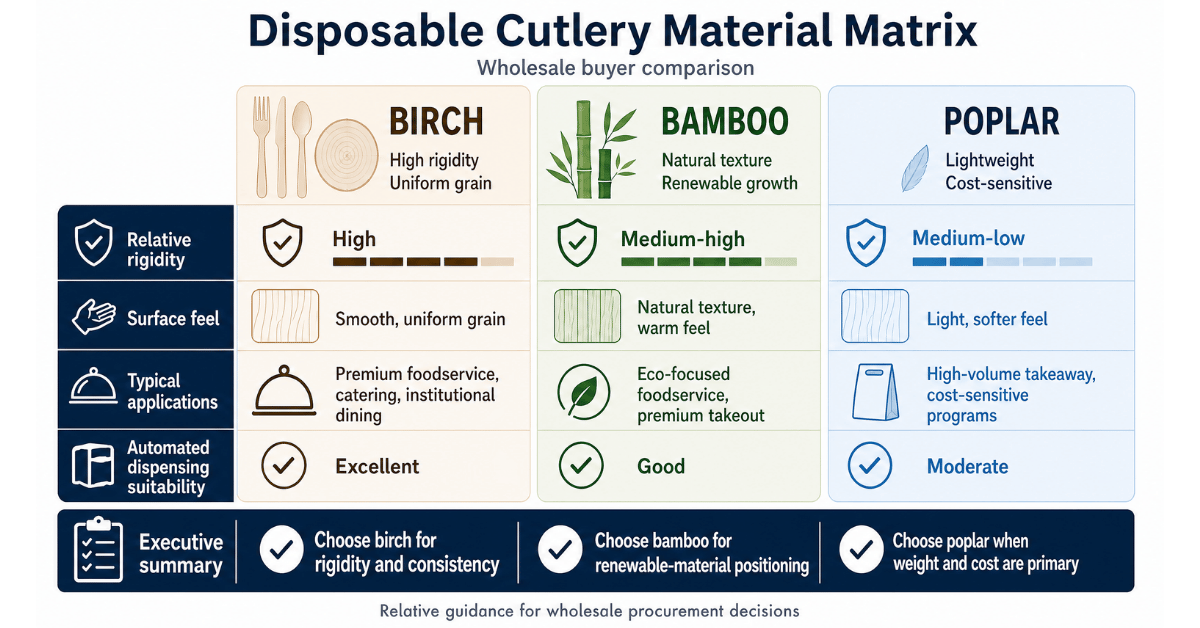
Why the Manufacturer Matters More Than the Raw Material Alone
Here is something worth sitting with: two factories can source the exact same birch and still ship noticeably different products. Raw material selection is only the starting point — drying control, cutting accuracy, shaping, polishing, quality inspection, and batch consistency all happen after that, and they are where a lot of the real quality difference gets made.
That is why it is worth vetting a supplier's process as carefully as you compare material spec sheets. A factory with strong automated production, consistent quality inspection, and export experience will generally deliver a more predictable product than one that is simply cheaper on paper.
YADA (Dalian Yada Industrial Co., Ltd.) has spent over 30 years manufacturing wooden and bamboo disposable products, with large-scale automated production and export experience across more than 197 countries. That manufacturing depth — consistent drying, precise cutting, reliable finishing — is often what determines whether a material choice performs the way it is supposed to once it is in a customer's hand.
Frequently Asked Questions
Is birch better than bamboo for disposable cutlery?
Neither is universally "better" — birch tends to offer a more uniform appearance and consistent processing, while bamboo offers a distinctive natural grain and renewable-resource story. The right choice depends on your product's intended use and your brand positioning.
Which wood is best for disposable spoons?
For most general foodservice use, birch offers the most balanced combination of strength, smoothness, and appearance. Bamboo and poplar each fit specific priorities, as outlined above.
Which material is more sustainable, birch or bamboo?
It depends on the full supply chain — forestry practices, certification, processing efficiency, and transportation — not just the material type. Ask your supplier for documentation rather than relying on general claims about the species.
What should I consider when buying wooden cutlery wholesale?
Material, dimensions, surface finish, food-contact compliance, certification, packaging, MOQ, and sample approval — the checklist above covers the essentials.
How can I verify the quality of disposable wooden cutlery?
Request physical samples before committing to a bulk order, ask for food-contact compliance documentation, and where possible, ask about the factory's production process — drying, cutting, and finishing methods — rather than relying on the material name alone.
Final Verdict: There's No One-Size-Fits-All Answer
- Choose birch when you need a balanced combination of strength, smooth finish, and clean, uniform appearance for general foodservice use.
- Choose bamboo when a renewable-material story and distinctive natural look matter to your brand and your customers.
- Choose poplar when lightweight construction, easy processing, and cost efficiency are your top priorities.
The best material, ultimately, is the one that matches your product specification, target market, sustainability commitments, and production expectations — not the one with the loudest marketing claim behind it.
Key Takeaways
- Birch (~1,260 lbf Janka) is the most balanced choice for general foodservice — rigid, smooth, uniform, and consistent across large production runs.
- Bamboo (~1,380 lbf) matches birch in hardness and adds the strongest renewable-material story and a distinctive natural grain.
- Poplar (~540 lbf) is the lighter, lower-cost option for applications where extreme rigidity is not the priority.
- Verify the factory’s drying, cutting, and finishing process — the manufacturer often matters more than the raw material alone.
Need help matching a material to your specific product? Browse our wholesale wooden cutlery sets, or let YADA help: YADA can provide samples, specifications, and a bulk quotation to help you make that decision with confidence. Contact YADA or send an inquiry to get started.