Bulk Buying Ice Cream Spoons: A Wholesaler's Quality Guide
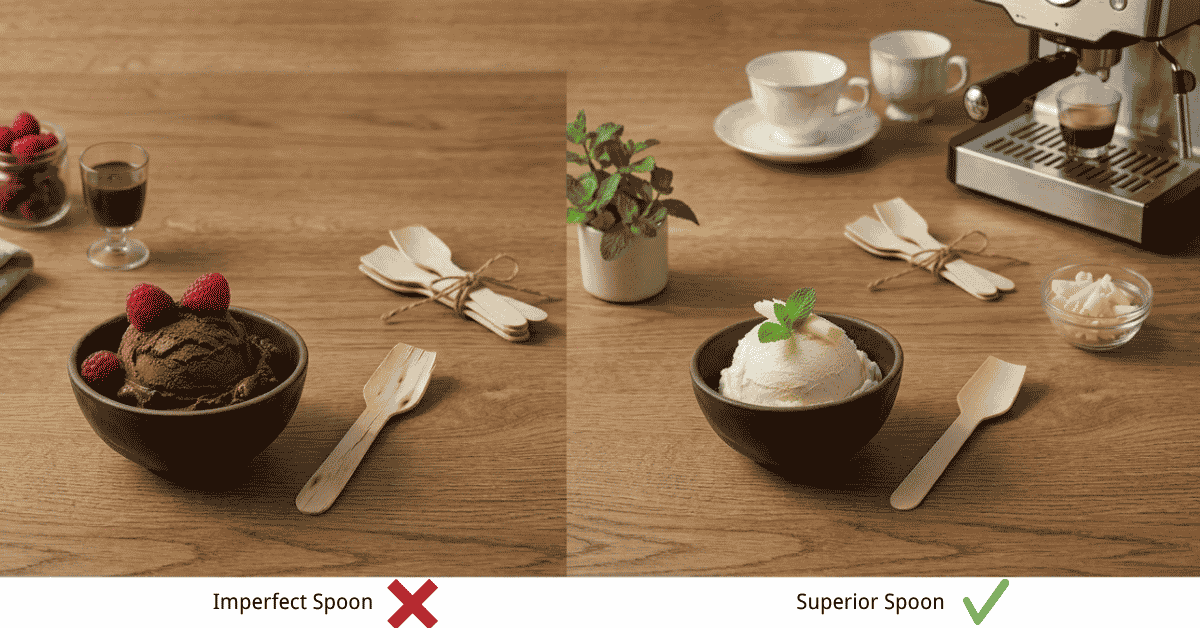
A wholesaler once contacted us in a panic after their seasonal inventory of wooden spoons failed. The samples had been perfect, but the bulk order arrived with chemical off-tastes, rough edges, and structural instability. Within three weeks, they were forced to pull their entire inventory at the peak of the season.
The lesson was clear: In the wholesale disposables market, small quality defects scale into massive business liabilities. A single negative review from a gelateria about a splintered spoon can cost you multiple long-term supply contracts.
After years of helping wholesalers navigate the disposables market, we've learned that the lowest quote rarely delivers true value. Here is an operational framework for sourcing ice cream spoons that protects your clients' businesses and your own reputation.
Why Ice Cream Spoons Require Specialized Quality Control
Unlike standard cutlery, ice cream spoons face unique operational stressors:
Prolonged Mouth Contact:
Spoons sit in customers' mouths while they savor each bite. Any chemical residue, unusual taste, or rough texture is noticed instantly.Temperature Cycling:
Spoons travel from room temperature into frozen desserts, then into warm mouths. This cycle reveals manufacturing flaws like cracking adhesives or wood deformation that room-temperature testing hides.Scooping Pressure:
Dense gelato and hard-packed ice cream require significant force. Poorly constructed spoons snap or bend, creating immediate customer frustration.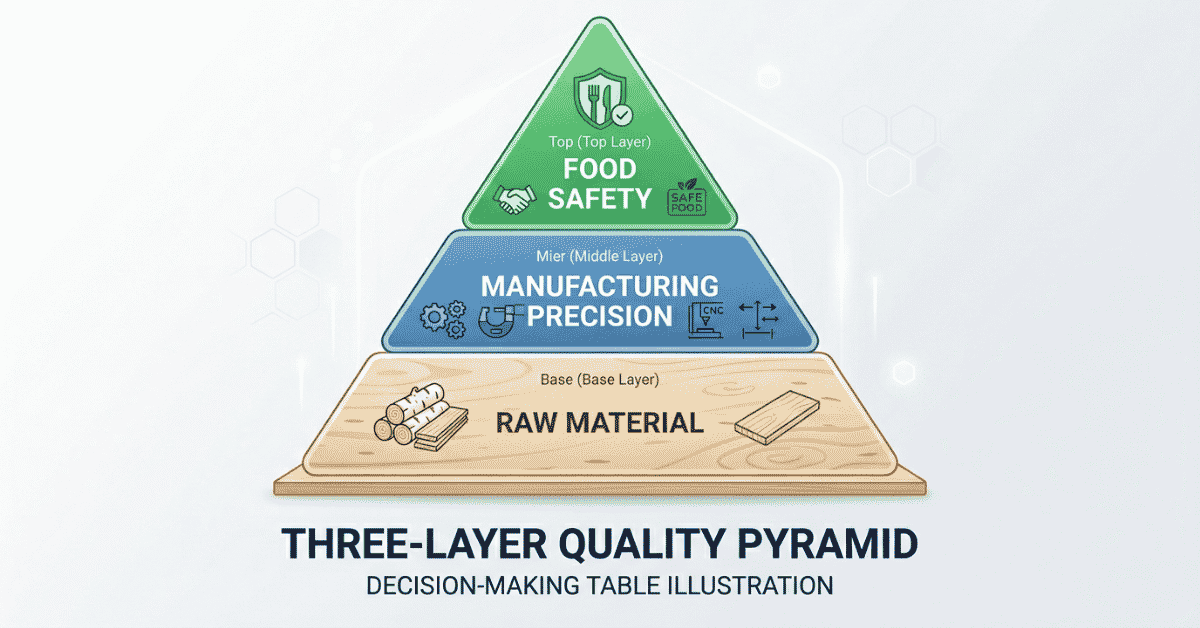
The Three Layers of Quality Assurance
When you purchase high-volume batches, you are buying three critical layers of production. Failures in any one will lead to client callbacks.
1. Raw Material Integrity
Species matters. Birch is the gold standard—it is smooth, tasteless, and splinter-resistant. Wood must be seasoned to a moisture content of 8-12%. Anything higher invites mold; anything lower makes the wood brittle and prone to cracking.
2. Manufacturing Precision
Perfect wood becomes a poor product without high-end manufacturing.
Edge Smoothness: The rim must undergo multi-stage polishing to eliminate micro-splinters.
Structural Consistency: Each spoon must have uniform thickness. Thin spots create weak points, leading to breakage during active use.
3. Food Safety Treatment
This is the most common failure point. Premium spoons use only food-grade, FDA-compliant treatments. Low-quality manufacturers may use industrial chemicals to speed drying or prevent mold, which can leach into cold, fatty desserts. Always request third-party food contact safety documentation.
The "Sample Trap" and Verification
A common industry secret: samples often originate from "boutique" production runs with higher QC, while bulk orders are produced on high-speed, lower-quality lines.
How to protect your inventory:
Demand Production-Batch Samples: Specifically request samples taken from regular production lines, not pre-selected "showroom" stock.
Execute Pilot Testing: Before committing to container loads, order a small test batch. Perform real-world stress tests: freeze them, heat them, and test them with dense, hard-packed ice cream.
Verify via Specifications: When requesting quotes, specify: "100% Grade A Birch, 8-12% moisture content, three-stage polished, and FDA food-contact compliant."
Warehouse Management and Client Education
Even high-quality wood can fail if stored incorrectly. Wood is hygroscopic—it absorbs moisture from the air.
Climate Control:
Maintain 15-25°C and 40-60% humidity.Ground Elevation:
Always store cartons on pallets at least 10cm off the ground to prevent moisture migration.Client Education:
Include a one-page storage guide with your deliveries. By helping your clients store products correctly, you prevent unnecessary complaints and build trust as a consultant, not just a vendor.Building a Sustainable Wholesale Strategy
The difference between a struggling wholesaler and a successful one is how they view disposable products.
Struggling Wholesalers treat spoons as pure commodities, chasing the lowest unit cost. They save marginally on procurement but lose clients due to constant quality emergencies.
Successful Wholesalers treat disposables as professional products. They specify clearly, verify documentation independently, and understand that consistent quality is the foundation of client retention.
Your reputation as a wholesaler is physically held in the hand of the end consumer every time they scoop. Choosing quality isn't just about avoiding complaints—it's about building a predictable, high-value supply chain that keeps your clients reordering for years.
At YADA , we have spent 30 years refining the balance between manufacturing precision and supply chain reliability. Whether you are vetting a new supplier or troubleshooting current specifications, we are happy to share our industry insights to help you build a more robust, compliant, and reliable inventory.
Click here to contact us for a consultation — we're here to help you get the specifications right, so you can focus on growing your business.