PPWR 2026: New Rules for Bamboo and Wooden Disposable Tableware
Before Reading: Can Your Current Supplier Pass This PPWR Check?
Answer these 5 questions:
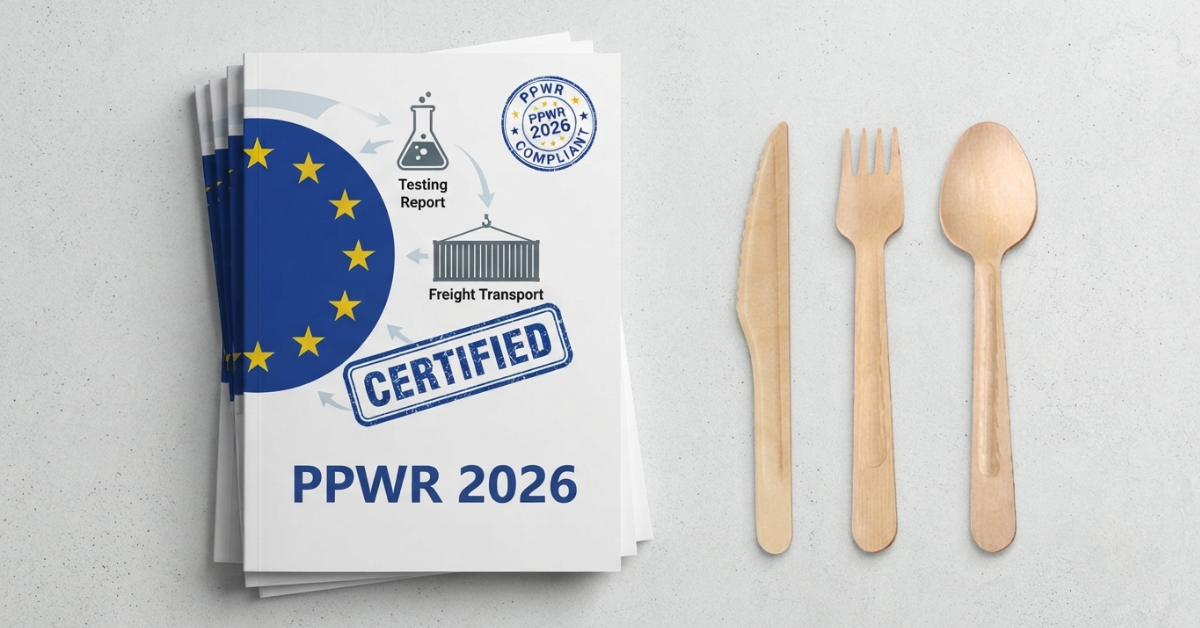
Picture a procurement manager whose supplier had passed every test report she'd ever asked for — heavy metals, migration testing, all clear. Then customs flagged an incoming shipment of wooden cutlery over incomplete technical documentation, and the order sat in a warehouse for weeks. The products were never unsafe. The problem was that "passing a test" and "being compliant" turned out to be two different things.
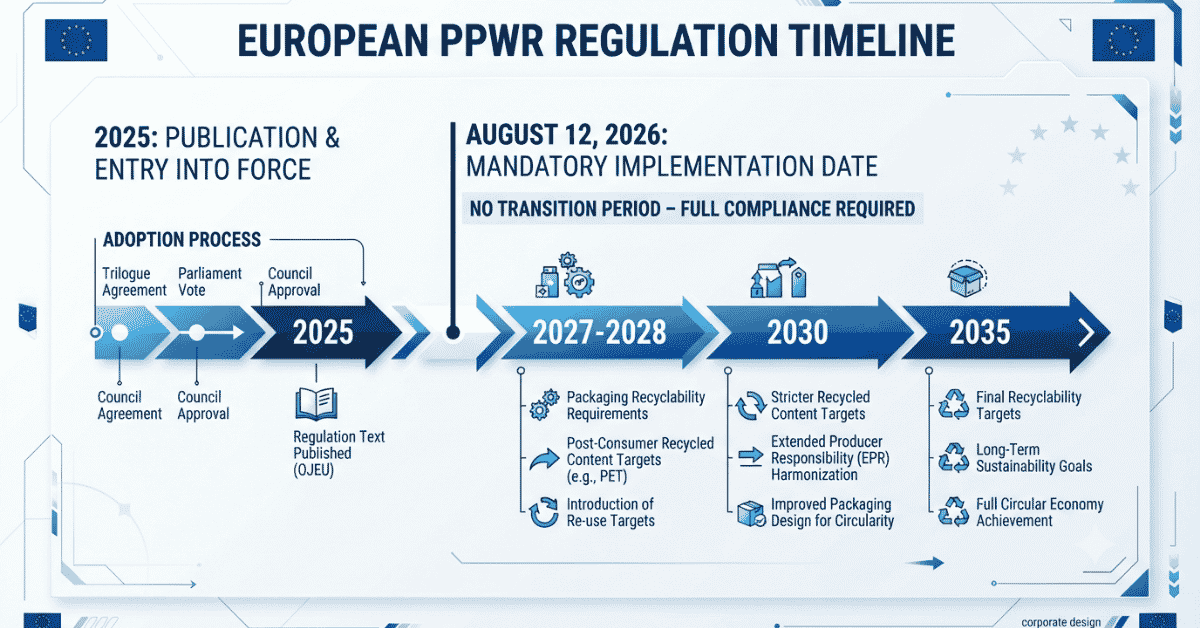
That gap is exactly what the EU Packaging and Packaging Waste Regulation (Regulation (EU) 2025/40, or PPWR) is designed to close. Starting August 12, 2026, PPWR will officially replace the old Packaging and Packaging Waste Directive (94/62/EC), and its impact will reach across the entire supply chain — packaging materials, food contact materials, supplier documentation, and compliance evidence systems.
In the past, a good supplier simply delivered products on time. Under PPWR, a good supplier must also deliver reliable, verifiable compliance evidence — before the shipment leaves the factory, not after it gets stopped at the border. This guide walks through what's changing, where buyers most commonly get caught out, and what to check before you commit to a supplier — regardless of who you choose.
1. What Is PPWR, and Why Should Disposable Tableware Buyers Care?
PPWR is not simply another packaging regulation — it represents a broader upgrade in supply chain compliance expectations. Its core objectives are straightforward:
✓ Reduce packaging waste across the EU market
✓ Improve packaging safety, including food contact safety
✓ Increase recycling and sustainability throughout the packaging lifecycle
For buyers sourcing disposable tableware, this translates into several practical concerns: whether packaging materials meet the new requirements, whether food contact safety is assured, whether hazardous substances are properly controlled, and whether technical documentation is complete and audit-ready.
2. Key Compliance Requirements Under PPWR
2.1 Heavy Metal Limits
PPWR sets a combined limit for lead, cadmium, mercury, and hexavalent chromium (Pb + Cd + Hg + Cr⁶⁺) of no more than 100 mg/kg. For traditional plastic or composite packaging, these elements can enter the material through inks, coatings, additives, or contaminated recycled content. Natural bamboo and wood materials, by contrast, generally contain extremely low levels of heavy metals when responsibly sourced and processed — giving wood and bamboo products a structural advantage before testing even begins.
Practical tip: if you're reviewing a heavy metal test report from any supplier, check whether it lists each of the four elements individually against the 100 mg/kg combined limit, rather than reporting a single vague "heavy metals: pass" line. A report that doesn't break out the individual figures is much harder to defend if a customs authority or retailer later asks for the underlying data.
2.2 PFAS Restrictions
This is an area where many buyers underestimate the requirement. A common misconception is that a single total fluorine test is enough to confirm PFAS compliance. In reality, PFAS assessment involves several layers: individual non-polymeric PFAS substances, targeted PFAS sums, and total PFAS content — with total fluorine testing serving only as an initial screening tool, not a final compliance answer. Wood and bamboo tableware carry a natural advantage here as well: no plastic coating, no grease-resistant chemical treatment, and no intentionally added PFAS.
Practical tip: when a supplier hands you a PFAS report, ask specifically which of the three layers it covers — total fluorine screening alone is not the same as a targeted PFAS panel, and a low total fluorine result doesn't rule out the presence of specific restricted substances. It's a fair, reasonable question to ask of any supplier, and one worth asking before you sign off on an order, not after.
2.3 REACH Compliance
It's important to note that PPWR does not replace REACH — the two frameworks operate independently. Suppliers must maintain compliance with REACH Annex XVII restrictions and SVHC (Substances of Very High Concern) reporting requirements alongside PPWR, supported by its own set of testing reports, material declarations, and supplier documentation.
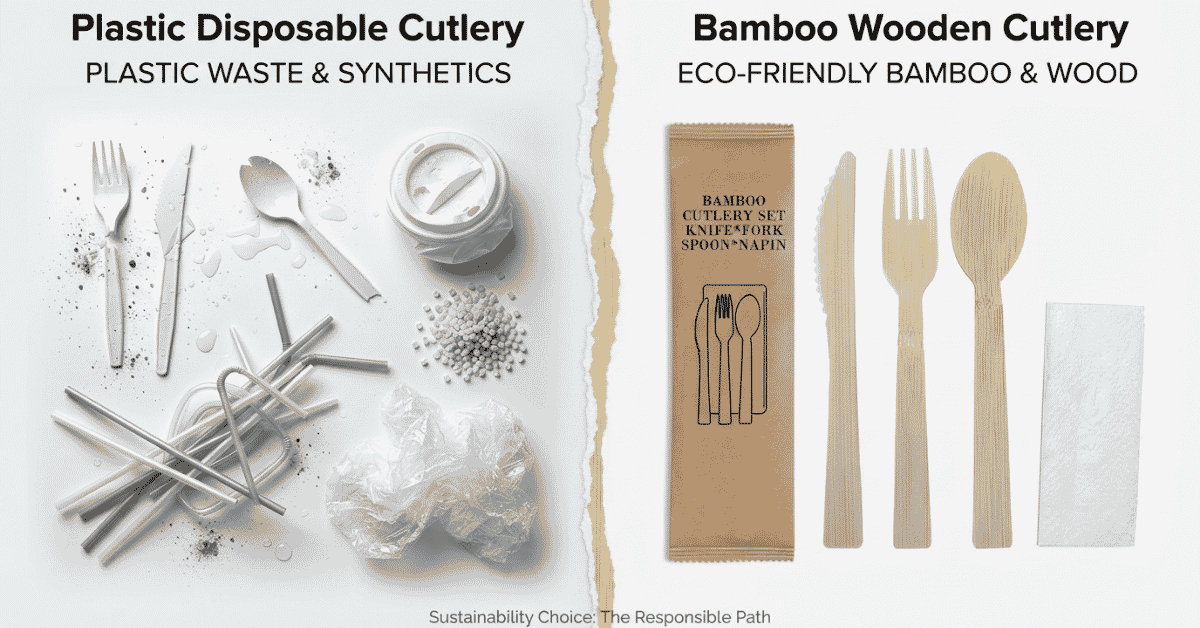
3. Why Bamboo and Wooden Tableware Have a Natural Advantage Under PPWR
| Requirement | Plastic/Composite Products | Bamboo & Wooden Products |
|---|---|---|
| Heavy metals | Depends on additives and coatings | Naturally low |
| PFAS risk | Possible from coatings | No intentional PFAS |
| Material complexity | Multiple components | Simple natural material |
| Documentation | More testing required | Easier traceability |
| Sustainability positioning | Increasing pressure | Renewable material advantage |
To be clear, bamboo does not automatically meet PPWR requirements simply by being a natural material. What it does provide is a strong foundation for companies seeking more sustainable, traceable, and lower-risk supply chains — a meaningfully easier starting point than complex multi-material packaging.
4. Why Testing Reports Alone Are Not Enough
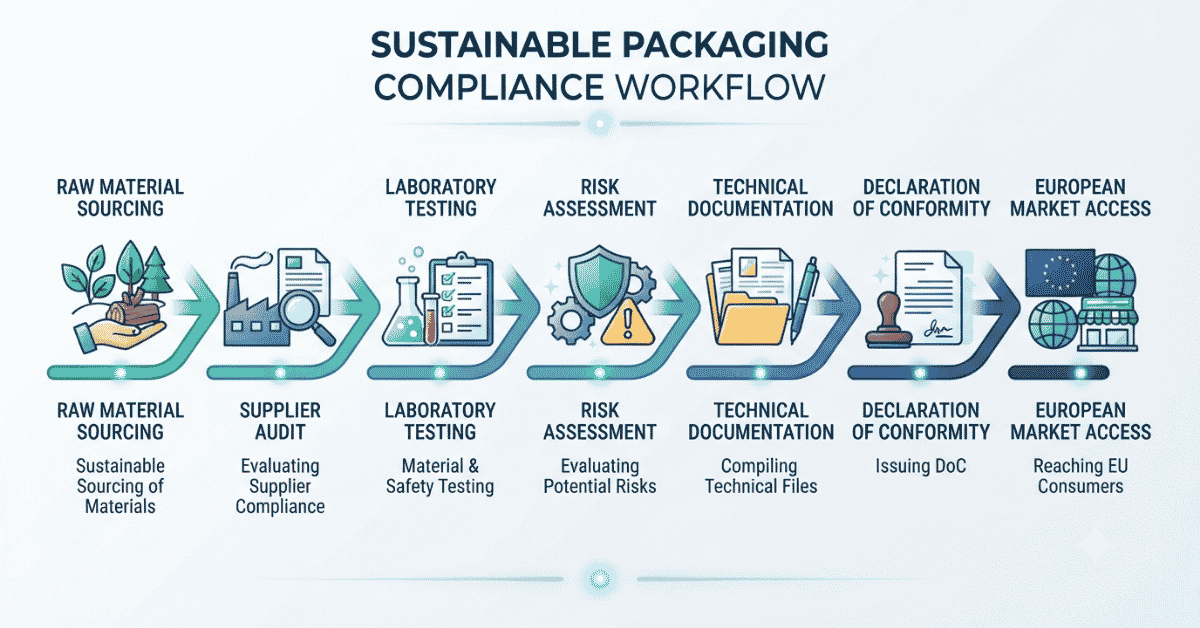
A common misunderstanding among buyers is that a passing test report equals full compliance. In practice, PPWR compliance is a chain of evidence, not a single document:
Material Traceability → Testing → Technical Documentation → Declaration of Compliance
Step 1 — Identify every packaging component.
This includes OPP bags, cartons, labels, printing ink, adhesives, and tapes. A single non-compliant component can compromise the entire package.Step 2 — Conduct proper testing.
Testing should be performed by laboratories with recognized accreditation, such as ILAC-MRA, CNAS, or UKAS.Step 3 — Build complete technical documentation.
This should include a packaging bill of materials, material composition and weight percentages, test reports, risk assessments, supplier declarations, and version-controlled records.5. What Global Buyers Should Ask Their Disposable Tableware Suppliers Before 2026
Before finalizing a supplier for the European market, buyers should ask:
Material Control — Where do raw materials come from? Is material traceability available?
Safety Testing — Is heavy metal testing in place? Is PFAS testing in place? Is REACH compliance documented?
Documentation — Is technical documentation available? Is a Declaration of Compliance available?
Supply Chain Management — Does the supplier have an audit system? Is there a process for keeping documents updated?
Keep this checklist on hand for every supplier conversation you have this year, not just this one. Even suppliers who mean well can fall short on documentation simply because no one asked them the right questions early enough — and it's a much easier conversation to have before an order ships than after it's held at customs.
6. How YADA Helps Global Brands Build a PPWR-Ready Supply Chain
Rather than claiming blanket compliance, Yada Industrial focuses on building the underlying reliability that PPWR-era buyers are looking for:
✓30 years of manufacturing experience in wood and bamboo products
✓Responsible material selection, using natural bamboo and wood from stable, controlled sourcing
✓A robust quality management system, certified to ISO 9001, BRCGS, FSC, GMP, Sedex, and BSCI
✓Complete documentation support, including testing coordination, compliance document assembly, and supplier information management
Our goal is not simply to pass a single test, but to give buyers the confidence that comes from responsible manufacturing and transparent documentation at every stage.
Conclusion: A New Standard for Supplier Reliability
PPWR is more than a regulation — it marks a shift in how European buyers will evaluate suppliers going forward. Competition will no longer be decided solely by who offers the lowest price, but by who can provide safer materials, transparent documentation, and dependable compliance support.
For global buyers seeking sustainable, PPWR-ready disposable tableware solutions, partnering with an experienced manufacturer with strong quality systems in place is no longer just good practice — it is becoming essential.
Meet the manufacturer behind this guide
YADA Industrial — 30+ years supplying eco-friendly wooden cutlery and bamboo tableware to wholesale buyers worldwide. Explore certifications, production bases, and the full product range.
Explore the YADA Manufacturer Profile