Top 10 Compostable Cutlery Manufacturers Worldwide (2026 Buyer’s Guide)
Why This Matters More Than It Looks Like It Does
You are not just buying disposable cutlery — you are buying months of trust with your own customers. Order from the wrong factory and you inherit their mistakes: a certification that does not hold up when a customer asks for proof, a wood species nobody mentioned, a "compostable" claim your own buyers cannot actually act on because there is no industrial composting facility anywhere near them. Order from the right one, and sourcing compostable cutlery quietly becomes one of the easier parts of your job.
That is the angle this guide is written from. Not "who's the biggest," but who will actually make your life easier six months into the relationship — when the first reorder, the first quality question, or the first customer complaint lands on your desk.
Below are ten manufacturers and brands working across wood, bamboo, PLA/CPLA, and bagasse — with what actually matters to you as a buyer under real pressure: certifications checked against each company's own published materials, genuine manufacturing capability, and the due-diligence questions that can save you from discovering, the hard way, that "eco-friendly" was just a font choice.
How This List Works for You
Rather than ranking by brand size or search visibility, this list is built around one question: if you are the one signing the purchase order, what do you actually want to know before your money leaves the building?
| What to Check For | Why It Matters to You |
|---|---|
| Product & material range | Fewer suppliers to manage if your needs span materials |
| Manufacturing capability | Whether they can actually hit your volume without surprises |
| Certifications & food safety | What you can legally and honestly claim to your own customers |
| Global export experience | Fewer first-time-shipper mistakes on your order |
| OEM/ODM & customization | Whether your brand — not theirs — ends up on the product |
| Sustainability transparency | Whether their "compostable" claim is something you can defend |
Materials covered: wooden cutlery, bamboo cutlery, PLA and CPLA (crystallized PLA) bioplastic cutlery, and bagasse (sugarcane fiber) tableware.
Who this is really for: importers trying not to get burned twice, distributors building a green product line, restaurant or catering groups whose customers are starting to ask questions, supermarket buyers who need certification that survives scrutiny, and private-label brands looking for a manufacturing partner rather than just a factory.
The Top 10 Compostable Cutlery Manufacturers Worldwide
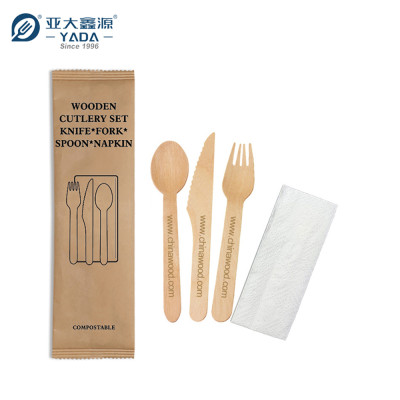
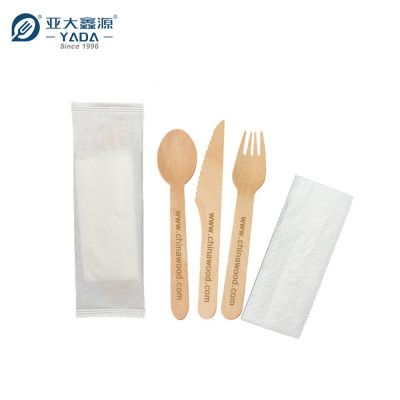
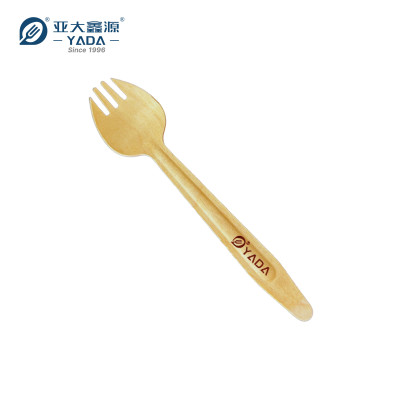
1. YADA — Dalian Yada Industrial Co., Ltd.
Best for: full-chain control, OEM/private label. If your priority is knowing exactly where your wood came from and who touched it before it reached your container, this is the profile worth reading closely.
Overview: Founded in 1996 and based in Dalian, China, YADA has close to 30 years of experience manufacturing disposable wooden and bamboo tableware. It runs three production bases — in Dalian, in Fujian, and one overseas — giving it a full industrial chain from raw wood and bamboo processing through to finished, packaged product.
Main materials: Solid birch wood and bamboo, sourced from FSC-certified, replanted and sustainably managed forests.
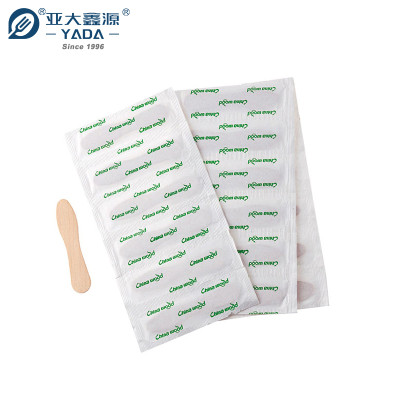
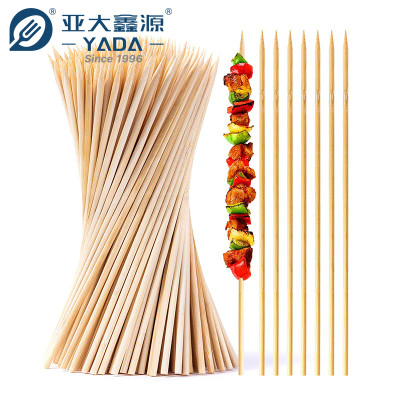
Key products: Wooden and bamboo forks, knives, spoons and sporks, ice cream sticks and spoons, coffee stirrers, skewers, chopsticks, food picks, decorative toothpicks, and food containers.
Certifications: ISO 9001:2015, GMP, BRC, Sedex/BSCI, FSC, and SGS testing.
Good fit if: you would rather deal with one manufacturer that controls the whole chain than a trading company sourcing from multiple sub-factories you cannot inspect — plus you want OEM/ODM support, free samples, and custom-drawn packaging.
What to ask before you order: the FSC chain-of-custody certificate and the food-contact test report for the exact wood species and finish you are buying, and which of the three production bases will actually fulfill your order — lead times can differ by site.
2. Greenwood
Best for: high-volume, multi-country supply. If a single-country supply chain keeps you up at night — a bad tariff season, a customs hold, one factory fire taking out your whole supply — this one is worth a look.
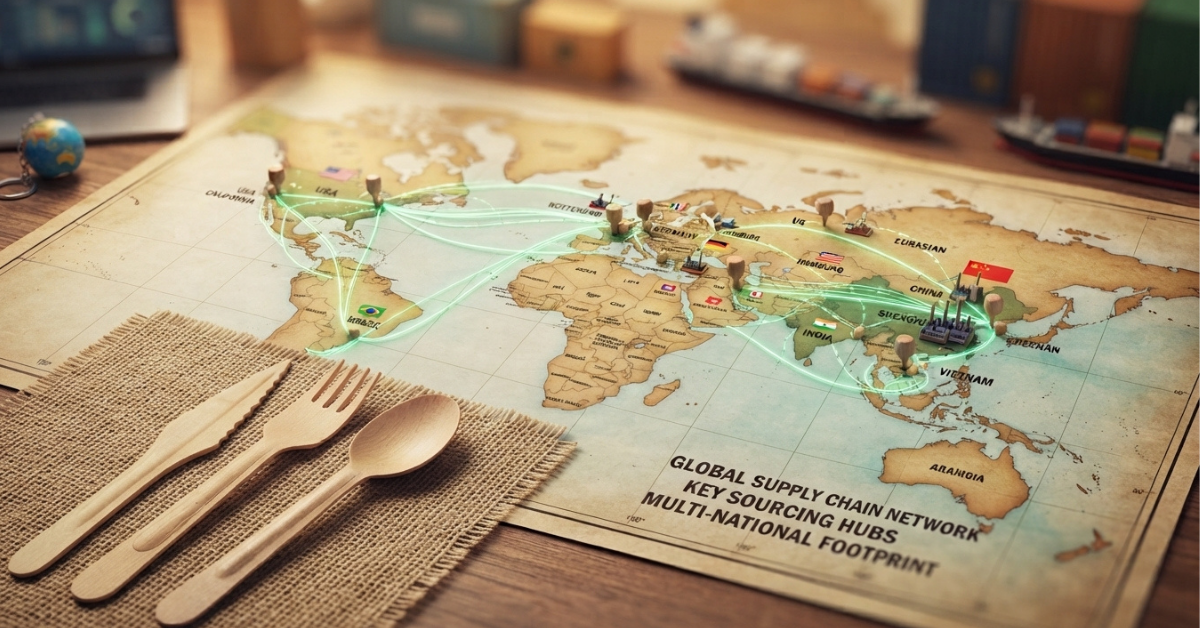
Overview: Dalian-based Greenwood was founded in 2000 and has spent roughly 25 years on R&D and manufacturing of biodegradable wooden and bamboo cutlery, with five production plants in China, Ukraine, Slovakia, and Bangladesh.
Main materials: Birch wood and bamboo, with newer investment in paper-based cutlery production.
Key products: A catalog spanning 10 categories and 116 styles of wood and bamboo cutlery, plus coffee stirrers and ice cream spoons. Stated full annual capacity of around 6 billion pieces.
Certifications: BRC, BSCI, FSC, SGS, and LFGB; the Bangladesh facility has also passed ISO 9001.
Good fit if: you want geographic diversification built in — useful for tariffs, EUDR documentation, or one region going down — combined with a very wide SKU range.
What to ask before you order: which plant will actually produce your order, and for the currently valid certificate from that specific site.
3. Bioleader — Xiamen Bioleader Environmental Protection Technology Co., Ltd.
Best for: heat-resistant bioplastic + bagasse. If your menu includes hot food and you need cutlery that will not go soft under a burger or a bowl of noodles, CPLA is probably already on your radar.
Overview: A bioplastics-focused manufacturer built around its own cornstarch and PLA sheet-extrusion system, which feeds its thermoforming and injection-molding lines directly.
Main materials: CPLA as its primary cutlery material, cornstarch-based bioplastics, and sugarcane bagasse for a smaller, specialty portion of its range.
Key products: Compostable forks, knives, spoons, sporks and individually wrapped cutlery sets, alongside bagasse food containers and PLA cups. Reported production of more than 1 billion pieces annually.
Certifications: ISO 9001, ISO 14001, BRC, NSF, FDA-SGS food-contact testing, BPI, OK Compost, EN13432, and ASTM D6400, plus LFGB.
What to ask before you order: which specific SKUs carry BPI or OK Compost certification versus which are only marketed as "biodegradable."
4. Vegware
Best for: branded UK/EU/US packaging range. If your customers are going to see "Vegware" on the packaging rather than your own private label, here is what that name actually buys you.
Overview: Founded in Edinburgh, Scotland in 2006, Vegware is a plant-based compostable foodservice packaging brand rather than a factory-direct manufacturer, selling in more than 70 countries. Certified B Corporation.
Main materials: PLA bioplastic and sustainably sourced paper/board, with reclaimed plant oils in some ancillary products.
Key products: A catalog of 350+ products spanning cutlery, hot and cold cups, soup pots, and takeaway boxes.
Certifications: Products certified to EN13432, with one of the most extensive compostability certification portfolios of any UK packaging supplier.
What to ask before you order: whether industrial composting collection actually exists in your specific market.
5. World Centric
Best for: B-Corp, US retail-ready. If you are selling into US retail and want a name your customer's own buyer already recognizes on the shelf, this one is worth knowing.
Overview: Founded in 2004 and based in Petaluma, California, World Centric began as a nonprofit and is now a Certified B Corporation and California Benefit Corporation that donates at least 25% of profits to environmental and social causes.
Main materials: PLA and TPLA bioplastic, wheat straw fiber, sugarcane bagasse, FSC-certified bamboo, and a molded-fiber line with no added PFAS.
Key products: Compostable forks, knives, spoons and sporks, tasting spoons, and serving utensils — including a collection carried at Target stores nationwide in the US.
Certifications: BPI-certified; among the first compostable-products companies to receive NSF Compostability verification; products meet ASTM compostability standards.
What to ask before you order: which material line (fiber, TPLA, or bamboo) matches the composting infrastructure your customers actually have access to.
6. Bifrost — Shenzhen Bifrost Industrial Development Co., Ltd. (EcoBifrost)
Best for: multi-material OEM/ODM flexibility. If you do not want to lock into one material forever — say you are on wood now but might move to CPLA next year — a multi-material factory saves you a full re-sourcing headache later.
Overview: Established in 1997, an OEM/ODM manufacturer with more than 25 years of relationships across Europe, the US, Japan, and China.
Main materials: CPLA, wooden cutlery, bamboo cutlery, and bagasse products, all within the same manufacturing group.
Key products: CPLA cutlery sets (heat-resistant to roughly 90°C), disposable wooden and bamboo cutlery, and bagasse plates, containers, and bowls.
Certifications: BPI, OK Compost, and Seedling marks, FSC for wood/bamboo sourcing, ISO 9001, and BRC, with compliance to FDA, EEC, Japanese Sanitation Law, EN13432, and ASTM D6400.
What to ask before you order: the specific compostability mark tied to the exact SKU you are buying — do not assume one certificate covers the full catalog.
7. Suzhou Quanhua Biomaterial Co., Ltd. (Nature Cutlery)
Best for: dedicated bioplastic specialist. If bioplastic is your entire program and you would rather work with a specialist than a generalist juggling five materials, this is worth comparing.
Overview: Originally established as Suzhou Suyuan I/E Co., Ltd. in 2006, reorganized as Suzhou Quanhua Biomaterial Co., Ltd. in 2018, running a 27,000-square-meter site with four plant buildings in Suzhou.
Main materials: PLA, CPLA, and PSM (plant starch material).
Key products: CPLA cutlery (forks, knives, spoons, and kits), PSM cutlery, and PLA drinking straws, across roughly 55 injection-molding machines.
Certifications: ISO 9001, ISO 22000, ISO 14001, BRC, BPI, and DIN Certco, with audits from Silliker, SGS, and Intertek. Fast sample turnaround — 3–5 days for standard samples.
What to ask before you order: whether you are buying PSM or CPLA/PLA specifically — PSM is explicitly not compostable despite the "plant-based" framing.
8. Shenglin — Dongyang Shenglin Plastic Co., Ltd.
Best for: individually wrapped CPLA kits. If your product is specifically individually wrapped takeaway cutlery, this narrower, more targeted option is worth checking.
Overview: Established in February 2006 in Dongyang, Zhejiang, this Shenglin entity has focused specifically on PLA thermoformed product development for close to two decades.
Main materials: CPLA (crystallized PLA) and cornstarch-based bioplastic.
Key products: CPLA cutlery kits, individually wrapped CPLA fork-and-spoon sets, and standard CPLA spoons, forks, and knives, positioned for takeaway and single-serving use.
Certifications: China's QS test, FDA, BRC, and LFGB. Export focus: EU, US, and Australian markets.
What to ask before you order: the CPLA heat-resistance spec (typically usable up to roughly 90°C) against your actual hot-food use case, and the exact registered company name.
9. Sabert Corporation
Best for: global partner for large accounts. If you are a large national account and cutlery is one line item inside a much bigger packaging RFP, this is probably already on your vendor shortlist.
Overview: Founded in 1983 and headquartered in Sayreville, New Jersey, Sabert has grown into a global food packaging manufacturer with more than 2,000 employees and seven-plus manufacturing facilities across the US, Belgium, England, Poland, and China.
Main materials: A multi-substrate portfolio including molded fiber — notably its PULP Ultra line — alongside other compostable and recyclable formats.
Key products: Compostable cutlery inside a much broader catering, hot-food, cold-food, and retail packaging range, built around its proprietary "Packaging Value Model."
What to ask before you order: MOQs and lead times up front, and be honest about your volume — Sabert's programs are typically built for large national accounts.
10. PacknWood
Best for: broad, style-forward catalog. If presentation matters as much as compostability to you — outfitting a wedding caterer or a design-forward restaurant group — the catalog breadth here is the actual selling point.
Overview: The American and British brand of First Pack, a family-owned French manufacturer and distributor with roughly 35–40 years of experience in eco-friendly disposable tableware.
Main materials: A six-material range including wood, bamboo, sugarcane/bagasse, cornstarch, and palm leaf.
Key products: More than 3,000 references spanning wood and bamboo cutlery, compostable cutlery kits, bagasse plates and trays, and styled tableware for fine dining, buffets, and events.
What to ask before you order: the country of origin for each specific SKU — origin affects your customs duties and any deforestation- or origin-related paperwork.
Quick Comparison Table
Bookmark this one — it is the 30-second version if you do not have time to read all ten profiles right now.
| Rank | Manufacturer | Headquarters | Founded | Primary Materials | Best For |
|---|---|---|---|---|---|
| 1 | YADA | Dalian, China | 1996 | Wood, Bamboo | Full-chain control, OEM/private label |
| 2 | Greenwood | Dalian, China + Ukraine/Slovakia/Bangladesh | 2000 | Wood, Bamboo, Paper | High-volume, multi-country supply |
| 3 | Bioleader | Xiamen, China | — | CPLA, Cornstarch, Bagasse | Heat-resistant bioplastic + bagasse |
| 4 | Vegware | Edinburgh, UK / Huntington Beach, US | 2006 | PLA, Paper/Board | Branded UK/EU/US packaging range |
| 5 | World Centric | Petaluma, California, US | 2004 | PLA/TPLA, Wheat Straw, Bagasse, Bamboo | B-Corp, US retail-ready |
| 6 | Bifrost | Shenzhen, China | 1997 | CPLA, Wood, Bamboo, Bagasse | Multi-material OEM/ODM flexibility |
| 7 | Suzhou Quanhua (Nature Cutlery) | Suzhou, China | 2006 | PLA, CPLA, PSM | Dedicated bioplastic specialist |
| 8 | Shenglin (Dongyang) | Dongyang, China | 2006 | CPLA, Cornstarch | Individually wrapped CPLA kits |
| 9 | Sabert | Sayreville, New Jersey, US | 1983 | Molded Fiber, Multi-substrate | Global partner for large accounts |
| 10 | PacknWood | France (US/UK brand) | ~35–40 yrs experience | Wood, Bamboo, Bagasse, Cornstarch, Palm Leaf | Broad, style-forward catalog |
Compostable Cutlery Materials, Explained So You Don't Get Caught Out
This is the part most "top 10" articles skip — and it is the part that actually protects you from an expensive mistake.
Wooden Cutlery
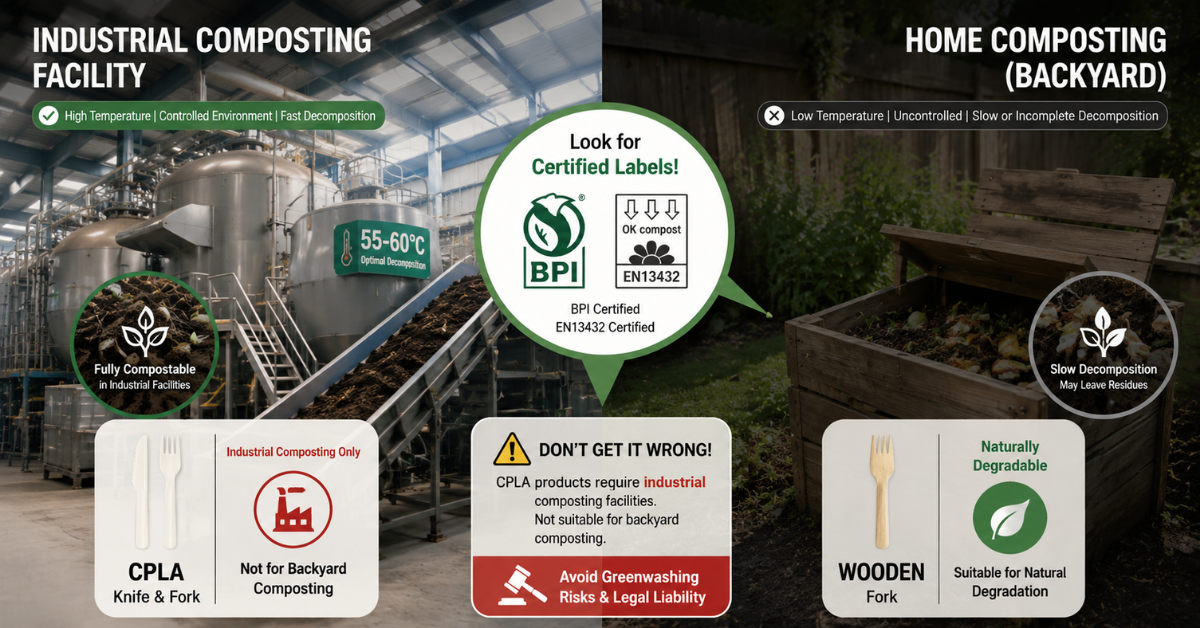
Typically birch, wooden cutlery is a single natural material with no added plastics when sourced from FSC-certified forests. It biodegrades under ordinary composting conditions without needing an industrial facility, has the premium look hospitality brands like, and holds up well for cold and room-temperature food.
Bamboo Cutlery
Bamboo is a fast-growing grass, not a tree, which gives it a strong "renewable" story. It offers comparable strength and appearance to wood, with a slightly different grain, and is frequently sold alongside wood by the same manufacturer.
PLA and CPLA Cutlery
PLA is a bioplastic derived from plant sugars, usually corn starch. CPLA is a crystallized, heat-stabilized version that tolerates hot food better (commonly up to around 90°C). Here is the part you are most likely to get wrong if nobody tells you: both generally require an industrial composting facility under EN13432 (EU) or ASTM D6400 (US) — they will not reliably break down in an uncontrolled home compost pile.
Bagasse (Sugarcane Fiber) Cutlery
Bagasse is the fibrous byproduct left after sugarcane is pressed for juice. It is most common in plates, bowls, and containers, and a smaller share of most manufacturers' cutlery lines — though Bioleader, World Centric, and Bifrost all offer bagasse cutlery or serving utensils.
Which Material Should You Actually Choose?
| Your Priority | Material to Consider |
|---|---|
| Natural, premium appearance | Wood or bamboo |
| Renewable, fast-growing raw material story | Bamboo |
| Familiar plastic-like feel and rigidity | PLA / CPLA |
| Heat resistance for hot food | CPLA |
| Plant-fiber, plastic-free positioning | Wood, bamboo, or bagasse |
| Limited industrial composting access in your market | Wood or bamboo |
There is no universally "best" material here. The right one depends on your product's actual use case, what composting infrastructure your customers can reach, and how your brand wants to tell its story.
Seven Questions Worth Asking Before You Sign
- What's the actual material? "Eco-friendly" tells you nothing. Ask for the specific material, its source, and whether any additives or coatings are used.
- Is it food-contact compliant for your market? FDA (US), LFGB (Germany/EU), or the equivalent for your destination, backed by an actual migration test report.
- What does "compostable" mean for this specific product? Industrial only, or also home compostable? Under which standard? What is the real timeframe?
- Can they actually hit your volume? Ask about factory location, number of lines, typical lead time, and capacity during your peak season.
- What's the MOQ, standard vs. customized? These can differ significantly — the advertised MOQ is often the stock-item number, not the private-label one.
- Can they actually do OEM/ODM if you need it? Logo printing, custom sizing, individual wrapping, retail packaging design — confirm capability and cost before you commit.
- Have you actually held a sample in your hand? Catalog photos will not tell you about smoothness, odor, strength, or how it performs with your actual food.
Certifications: Keep This List Next to You on Supplier Calls
Every item here is something a reputable manufacturer should hand over without hesitation. If a supplier hesitates on more than one of these, that is useful information too:
- Material specification sheet
- Food-contact safety test report (FDA, LFGB, or the relevant standard for your market)
- Compostability certification (BPI, OK Compost, DIN Certco, or Seedling) tied to EN13432 or ASTM D6400
- FSC certificate and chain-of-custody documentation, where wood or bamboo is involved
- Factory quality management certification (ISO 9001, BRC, or equivalent)
- Certificate of Analysis, where applicable
- A sample approval process before production begins
What Actually Drives the Cost
You will not get a fake per-piece number here — the real cost genuinely depends on material, order size, and destination. What is more useful is knowing what moves the number:
- Raw material (wood/bamboo vs. PLA/CPLA vs. bagasse)
- Product size and thickness
- Order quantity and MOQ tier
- Packaging complexity (bulk carton vs. individually wrapped)
- Printing or logo customization
- Certification requirements for your specific market
- Shipping destination and freight mode
- Tooling costs for non-standard shapes
One thing worth sitting with: the lowest quoted unit price is often the most expensive purchase you will make all year, once you count defect rates, packaging damage, shipping inefficiency, MOQ mismatches, and compliance risk.
Which of These Sounds Like You?
- Importer — you probably care most about price, workable MOQs, full-container efficiency, and a supplier who has shipped internationally before.
- Distributor — you need SKU breadth, supply stability, and packaging flexibility to serve customers with very different needs.
- Restaurant or catering group — consistency and food-safety documentation matter more than novelty, plus the option to put your own name on it.
- Supermarket or retail buyer — retail-ready packaging and certification that survives a consumer-facing claim.
- Private-label or DTC brand — strong OEM/ODM support is non-negotiable: logo application, custom packaging, and real product-development collaboration.
The Shortcut, If You Just Want the Answer
- Wood and bamboo with full-chain manufacturing control: YADA
- Large-scale, multi-country wood and bamboo supply: Greenwood
- CPLA/cornstarch bioplastic plus bagasse in one program: Bioleader
- A branded UK/EU/US compostable packaging range: Vegware
- A mission-driven, B-Corp, US retail-ready compostable brand: World Centric
- Multi-material OEM/ODM flexibility: Bifrost
- A dedicated PLA/CPLA specialist factory: Suzhou Quanhua (Nature Cutlery)
- Individually wrapped CPLA cutlery kits: Shenglin
- A globally coordinated packaging partner for national accounts: Sabert
- A broad, style-forward multi-material catalog: PacknWood
Questions You're Probably Already Asking
What's compostable cutlery actually made from?
Most commonly wood (typically birch), bamboo, PLA or CPLA bioplastic derived from plant starch, or sugarcane bagasse fiber.
Biodegradable vs. compostable — is there really a difference?
Yes. Biodegradable just means a material breaks down eventually, with no defined timeframe. Compostable is a certified claim — under EN13432 or ASTM D6400 — that a product breaks down into non-toxic compost within a defined period under specific (usually industrial) conditions.
Is wooden cutlery really compostable, or is that marketing?
It is real. Untreated wood and bamboo generally biodegrade under normal composting conditions without needing an industrial facility, though the exact timeline varies.
Is PLA cutlery actually compostable?
Yes, when properly certified — but almost always only in an industrial composting facility, not in your backyard bin or in general landfill conditions. This is the single most common point of confusion for end customers.
What certifications should you actually ask for?
At minimum: a compostability certificate (BPI, OK Compost, or DIN Certco) tied to EN13432 or ASTM D6400, a food-contact safety test report, and a factory quality certification such as ISO 9001 or BRC.
What's a normal MOQ?
It varies enough by manufacturer, material, and season that your best move is to ask each supplier directly rather than trust a number in an article.
Can you get your own logo on it?
Most manufacturers on this list offer OEM/ODM services including logo printing, custom packaging, and in some cases custom shapes — just confirm MOQ and tooling costs for the custom work.
Do you really need to request samples first?
Yes, every time. Photos and spec sheets cannot tell you about smoothness, odor, strength, or how it performs with your actual food and packaging.
Where This Leaves You
The best compostable cutlery manufacturer is not the one with the lowest quoted price or the widest catalog — it is the one that consistently delivers the right material, real certification, and reliable supply for your specific market and volume, without making you chase them for documentation every time a customer asks a question.
If your priority is wooden and bamboo cutlery backed by a manufacturer that controls its own supply chain — from FSC-certified raw material through to finished, packaged product — a full-chain supplier like YADA has spent close to 30 years building exactly that kind of operation, with the certifications, OEM/ODM support, and export experience to back it up when your own customers start asking questions.
Looking for a wooden and bamboo cutlery manufacturer who will actually answer your questions before you order, not just after? Put your specific specs and certification requirements in front of the supplier's team directly — that conversation tells you more than any article ever could.