Biodegradable Wooden Cutlery Sets Manufacturer.
How a New Box Design Cut Our Material and Labor Costs
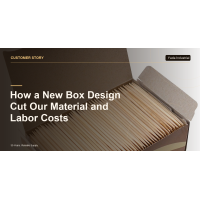
Customer Story · Brazil · Bamboo Toothpick Packaging
We make bamboo toothpicks in Brazil, 1,000 to a box. For years the box was the last thing anyone thought about. Then labeling started eating up more and more line time, and complaints began trickling in about boxes bulging open and toothpicks spilling out. The two problems looked unrelated, but they had the same cause: we were relying on a label to do a job the box structure should have been doing.
Customer
Consumer goods brand in Brazil, selling bamboo toothpicks in boxes, with steady high-volume orders
Product
Bamboo toothpicks, 1,000 per box - slim, lightweight, and packed in high counts
Challenge
One label per box to seal it, driving material and labor costs, while transit vibration kept forcing the closure open
Result
Label eliminated, structure took over the sealing job, and both spillage and opening damage improved
How we used to do it
One label holding 1,000 toothpicks that refuse to sit still
Our packaging logic was simple: pack 1,000 toothpicks into a box, seal the opening with a label, and trust that bit of adhesive to keep everything in during transit.
It worked, as long as one assumption held: that the 1,000 toothpicks stayed put. They don't. A box of toothpicks isn't one solid object. It's 1,000 slim, lightweight sticks that barely grip each other.
Hit the road and the whole pile shifts to one side. Add rough roads and it keeps pressing against the opening. That label isn't holding one product in place; it's holding back 1,000 sticks looking for any gap. At low volumes and short distances, the adhesive held. Scale up the batches and the shipping distances, and it started failing one box at a time.
It never failed dramatically. No whole shipment ever arrived destroyed. Problems showed up box by box, and by the time you noticed, they were routine.
The three costs
The label wasn't saving money. It was moving costs downstream.
We broke it down and found three separate costs. None was serious on its own. Together, they changed the whole picture.
What that one label cost us
redesign
What we actually needed
Where we got stuck
Secure in transit, easy to open - conventionally, those pull against each other
We tried a few rounds ourselves. Stronger adhesion meant a stickier label or a second one. Easier opening meant giving up some holding power. Cutting cost meant compromising both. Every tweak just moved the problem from one end to the other.
Then it clicked: we kept adjusting the consumable, and never once touched the box itself.
The spillage came from flow, not from something coming loose. A thousand small pieces redistribute inside the box and pile toward the path of least resistance, which is always the opening. Seal that opening tighter and you only pack them harder against it. All the pressure lands on that one label.
Holding things in place is a job structure can do. Tabs, locks, fitted stops, and inserts can locate a product far more reliably than adhesive, and they don't break down in heat or humidity. We simply hadn't thought to go that direction, because we kept adding to the existing box. Adding never produces a structure.
What Yada Industrial did
Change the structure, not the consumable
When we handed over the brief, they didn't come back with a quote for an off-the-shelf box. They asked five things first: toothpick dimensions and count per box, box weight, how the sticks sat inside, our real shipping and handling conditions in Brazil, and how we wanted the box to open and what the brand should feel like.
Their answer was blunt: stop adding consumables to this box and redesign the structure. Four changes, working together.
Tuck flap
We reworked the length and position of the flap so the closure itself does the holding, instead of merely covering the opening.
Locking tab
The lock was engineered to carry load. The harder the toothpicks push, the tighter it grips, with no adhesive doing the work.
Fitted stops
Stops sized to the actual packed volume of 1,000 sticks, so there's no room for them to flow toward the opening.
Insert
A paper insert takes over the positioning job the label used to do, removing that consumable entirely.
Together, the four changes gave 1,000 toothpicks a stable position inside the box, and the pile stopped migrating toward the opening. The label disappeared from the design altogether, not reduced, gone.
They also rethought the opening sequence. With transit stability intact, they redesigned how the box feels in the hand and the order in which it opens, so people follow the intended path instead of forcing it. I didn't pay much attention to that at first. It turned out to be the real reason box damage dropped: the label wasn't tearing our boxes open; the wrong opening motion was.
The testing we insisted on
Samples, open-and-close cycles, transit simulation - we didn't skip a step
Step 1
Prototype first, loaded with real product
With a new structure, looks weren't the worry. We needed to know if it would survive a Brazilian route. So the first prototypes weren't empty mock-ups; we loaded them with 1,000 real toothpicks to see whether the stacking and the stops actually worked.
Step 2
Open-close testing and transit simulation
We opened and closed them repeatedly to see whether the lock and flap loosened with use, and simulated transit vibration to check whether the sticks shifted toward the opening. We also verified board strength and die-cut precision, because those decide whether the structure holds up on every single box, not just the sample.
Step 3
A small pilot run before full production
Removing the labeling step made the operation simpler, but the workflow changed and operators needed to get used to it. They ran a small pilot with us, confirmed the line transition was clean, and only then did we scale into full production.
The result
We saved more than the cost of the labels
Cost. The label material and the labeling labor went away together, along with a bottleneck in the middle of the line. That's not a one-time saving; every shipment saves it again.
Spillage. With the sticks held by structure, they stopped piling at the opening, and closures gave way far less often in transit and handling. This is the hardest benefit to put a number on, and the one we value most. It means the hard-to-explain after-sales cost stopped climbing.
Opening. The box opens the way it should, and the torn faces from peeling labels are gone. The surface stays clean, which is the first thing anyone sees on a shelf.
The line. Take out the labeling step and the operation runs smoother. Efficiency went up without anyone setting out to optimize it.
What we care about most is how it arrives: a clean face and an opening that moves smoothly. Shoppers can't see what we saved on consumables, but they can feel a box that opens right and pours out clean.
A consumable is a cost that keeps coming back. A structure is a one-time design decision. What we spent on a single label was pennies per box, until you multiply it by volume, by years, and by the write-offs and complaints piled on top. The total was far bigger than we imagined. Redesign the box once and the saving stays.
Consumer goods brand, Brazil · Bamboo toothpicks, 1,000 per boxMy advice
If you're labeling toothpick boxes too, three things
What goes wrong most often with 1,000-toothpick boxes?
Not the box breaking; the closure giving way. Toothpicks are slim, light, and barely friction against each other, so vibration makes them redistribute toward the path of least resistance, which is always the opening. A label alone ends up carrying the constant push of the whole box. That's the first thing to fail on us, and rarely in one or two boxes. Usually several in a carton.
Does a new box design slow down packing or require a line change?
In our case it got faster. We used to box and then label; that second step is gone, so there's one less operation. The real cost isn't equipment, it's habit. Operators have to learn the new fold and lock, so run a small pilot before you scale. Don't skip it. Skip it and the problems just surface at full volume.
What should you bring to the first conversation with a supplier?
Five things: product dimensions and count per box, packed box weight, how the product sits inside, your real shipping and handling conditions, and how you want the customer to open it. The first four decide whether the structure can work; the last one decides the unboxing experience. Give all five and you get a box designed for your product. Give only half and you'll get a quote for a generic box. That's exactly the list we handed over.
Yada Industrial · Customer Story · Bamboo Toothpick Box Design and Packaging Cost Reduction
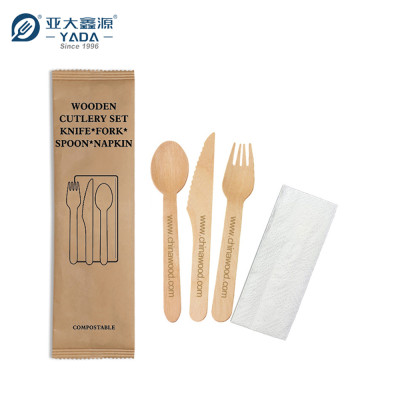
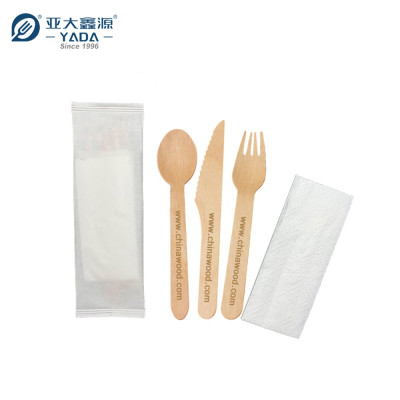
Are you looking for a reliable manufacturer of wooden tableware products?
We can quickly provide customers with market analysis, technical support and customized services.Biodegradable Wooden Cutlery Sets Manufacturer.