
Biodegradable Wooden Cutlery Sets Manufacturer.
They Could Have Sold Me a Higher Grade. They Didn't.

CUSTOMER STORY · FRANCE In this trade, the thing that hurts you is not a price you cannot agree on. It is a price you agree on, and then the returns start coming in. I import barbecue and outdoor lines into France, and this is how 360 cartons of bamboo skewers ended up on one grade that cleared both my cost target and my own incoming check.They Could Have Sold Me a Higher Grade. They Didn't.
BUYER
Mid-sized importer and wholesaler of BBQ and outdoor-entertaining products, France
PRODUCT
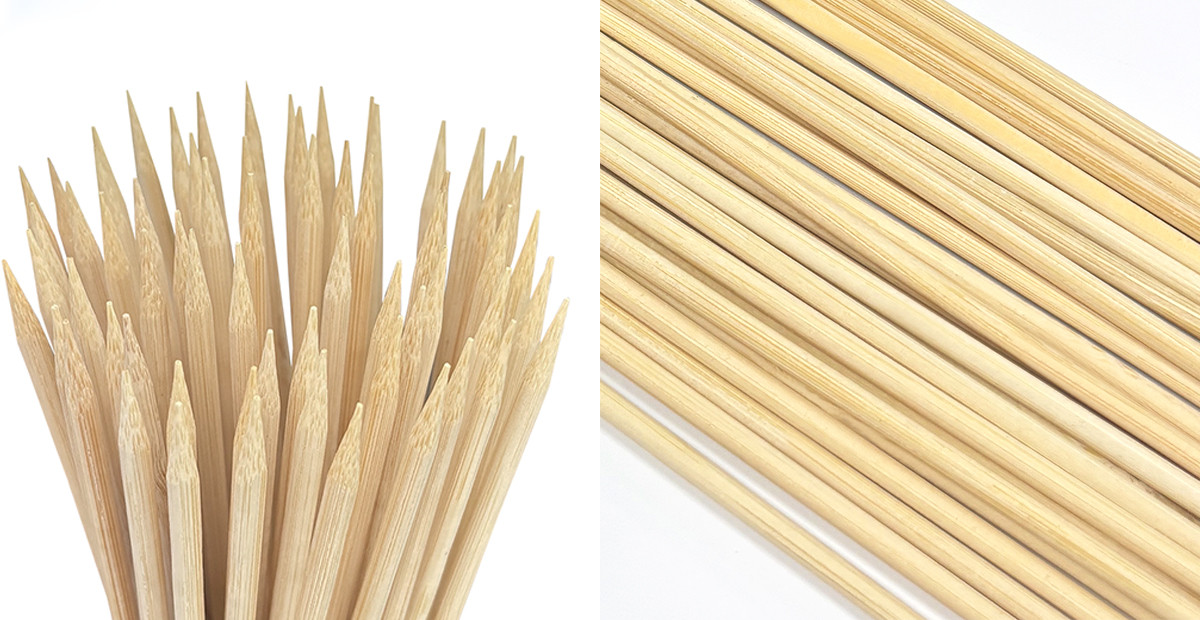
Disposable bamboo BBQ skewers, BB-300, 3.0 mm x 300 mm, single-pointed, natural finish
CHALLENGE
One grade that fits a margin set months earlier and survives a full season
RESULT
360 cartons, one grade, no split sourcing, November sailing held
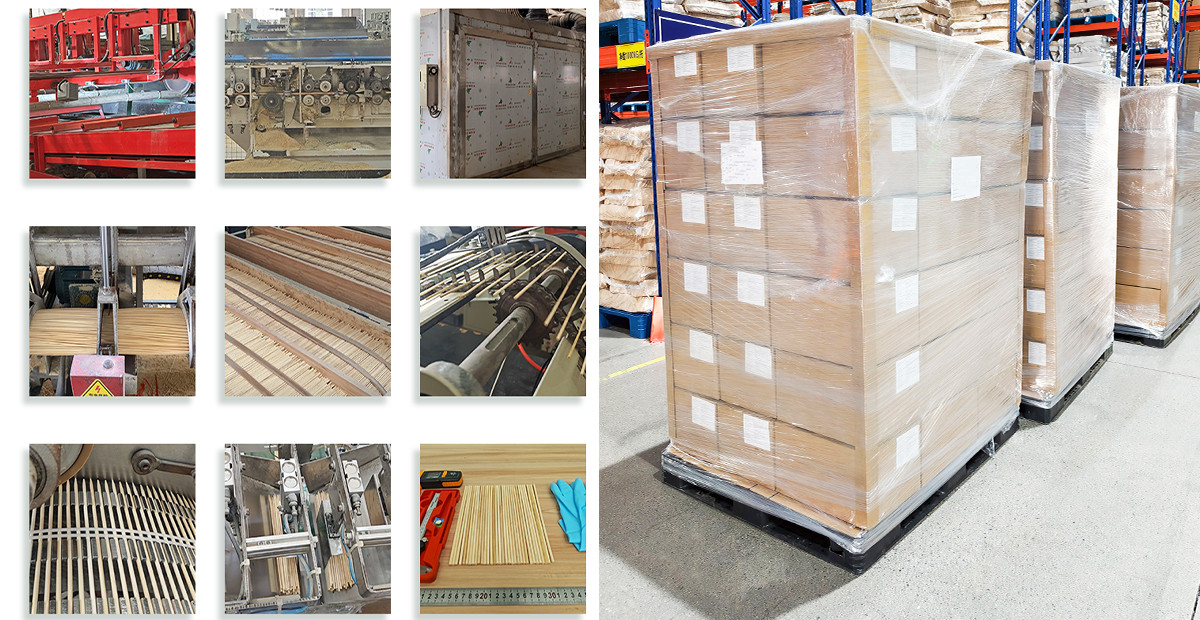
WHERE I WAS COMING FROM I import and wholesale barbecue and outdoor-entertaining products in France. My customers are supermarket chains, garden centres and foodservice distributors, and we supply them nationwide. Skewers are a seasonal core line for us. All the volume lands in a few spring and summer months. The retail price is fixed months before the season opens, and if quality goes wrong at peak, you do not get that year back. Before this order I had never bought directly from YADA Industrial. Skewers came to me through trading intermediaries. That is not a knock on middlemen — the chain was simply too long. I could not tell you which grade sat behind a given shipment, and I had no realistic way to check. The item itself: 3.0 mm x 300 mm, single-pointed, natural finish. Straightness and surface finish are the first two things my incoming check looks at — and the two things a quotation sheet never shows you. THE BRIEF My brief was one sentence: a good product at a low price. Value, not the cheapest quote on the market. One sentence, two requirements, and in this category they pull against each other. Here is what actually had me stuck: it was not price on its own, and it was not quality on its own. It was that neither of the first two offers I got gave me both. Specify up and you pay for it. Specify down and you pay for it later, in reputation. On a quotation sheet, those two look exactly the same. TWO SAMPLE ROUNDS, TWO NO'S ROUND ONE Their standard export grade landed where I needed it on cost, but it did not clear my incoming check. The surface finish and the straightness were not consistent enough for a pack that goes straight onto a retail shelf. I was not going to gamble a seasonal line on it. ROUND TWO The premium grade cleared my checklist comfortably. The unit cost no longer fit the price the product has to sell at. At that point I was seriously pricing out a split order — one supplier for cost, one for quality. That would have meant two sets of inspections, two sets of paperwork, twice the admin, with the shipping window already closing on me. THE THIRD WORRY I did not say much about this one at the time, and it was the one that decided everything. A sample that is right once is not worth much. I needed to know that 360 cartons, produced weeks later, would be the same grade — without me re-checking them carton by carton. WHAT CHANGED THE DECISION I expected a different number. What I got was a grade matrix. They had split the range along the things that actually move cost and quality: bamboo selection and node-free straightness, diameter tolerance, number of polishing passes, moisture content, and acceptable defect rate. Each band was pinned to measurable criteria. For the first time I could see what the next step up would buy me in physical terms, instead of a phrase like "better quality". Then came the line that closed it. What they recommended was the lowest band that still cleared every point on my inspection sheet, while staying inside the price envelope my shelf allowed. Selling me up would have been the easier conversation for them. It would also have failed the brief. What I needed was the lowest grade that still passes, and that is what they quoted. They let me verify instead of asking me to trust. A golden sample was sealed and approved out of the actual production lot, and a pre-shipment inspection against the agreed AQL was carried out before loading. My own quality standard became the acceptance criterion, not their brochure. That is how "will the bulk match the sample" dropped out of my decision. One thing I did not register at the time: once the grade was confirmed, the production slot was held, so the November sailing was never at risk. On a seasonal line, arriving late is its own kind of quality failure. PRODUCTION AND PACKING Bamboo skewer production, and the pallet packing built before loading. This is the stage the pre-shipment inspection happens at — after the grade is set, before the container is closed. What stayed with me was not the price they gave me. It was that they quoted the grade that fit my shelf instead of the grade that fit their order book — and then handed me a way to prove it to myself, load after load. MY ADVICE Is the cheapest quote the answer on a seasonal line? Not for me. The cheapest quotes I was getting did not tell me which grade sat behind the shipment, so I had no way to tell a bargain from a future complaint. What worked was writing down my own incoming check and asking suppliers to quote against it. The number that finally fit was the lowest grade that still cleared that sheet — not the lowest number on the market, and not the premium grade either. How do I know the bulk will match the sample? Make the sample come out of the production lot, not out of a showroom. Seal it, have both sides sign it, and write the pre-shipment inspection against an agreed AQL into the contract before loading. Once the acceptance criterion is your own checklist rather than a supplier's brochure, it stops being a question of trust. What should I put in a first enquiry for bamboo skewers? Five things: size and model (mine was BB-300, 3.0 mm x 300 mm, single-pointed, natural finish), quantity in cartons, the date it has to be in your warehouse, the retail price the product has to sell at, and your own incoming checklist. With those five you get a grade recommendation instead of a catalogue. Send the size, the cartons, the warehouse date and the price the product has to sell at. You get a grade recommendation measured against your own checklist — not the highest grade we can make.Skewers Came to Me Through the Middle
One Sentence, Two Requirements, Pulling Apart
What a bad batch costs me
BRIEFWhat I actually needed
I Turned It Down Twice Before I Signed Anything
The grade was not there
The quality was there, the budget was not
Would the bulk match the sample?
They Did Not Come Back With a New Price
The Stage My Sample Was Actually Checked Against
If You Are Negotiating This Right Now, Three Things
Sourcing bamboo skewers for next season?
Published by YADA Industrial · Customer story · Bamboo BBQ skewers for importers and wholesalers
Are you looking for a reliable manufacturer of wooden tableware products?
We can quickly provide customers with market analysis, technical support and customized services.Biodegradable Wooden Cutlery Sets Manufacturer.