Custom Wooden Coffee Stirrers: What Specifications Should Buyers Confirm Before Production?
A wooden stirrer looks like the simplest item on a beverage project. It is also the item most likely to arrive wrong, late or slightly off the approved sample, because almost nothing about it is decided for you: length, head shape, tolerance, surface, logo and pack format all become custom decisions the moment you order for a brand.
Before you approve a custom wooden stirrer order, get ten things in writing: material, dimensions, shape, tolerances, surface quality, customization, packaging, quality-control criteria, order quantity and the date the goods must reach you. Put them on one specification sheet, approve a sample against it, and plan the schedule backward from your arrival date, not from the factory's "ready date." It takes an afternoon, and it can save you a re-run or a missed launch.

01 Why Does Specification Confirmation Matter for Custom Wooden Stirrers?
If you buy custom wooden stirrers for a café chain, a retail promotion, a beverage brand or a foodservice range, you are probably juggling cup sizes, lids, dispensers, brand guidelines and a launch date all at once. It is easy to treat the stirrer as the simple part.
It stays simple only when the details are written down. A stirrer a few millimetres too long for the lid, round heads that differ from batch to batch, a rough surface your customers notice, cartons that do not fit your warehouse, goods that arrive after the campaign has started: these are the kinds of problems that turn up in custom orders, and nearly all of them are cheaper to prevent than to fix.
This guide is written to protect you as a buyer. Use the checklist with any supplier, compare their answers side by side, and treat the real product data you see below as an example of how specific and checkable a good answer looks.
02 What Specifications Should Buyers Confirm Before Production?
Ten items. If you only have time for one step, put this table in front of your supplier and ask them to fill in every row for your own product.
| Specification | What to confirm | Why it matters to you |
|---|---|---|
| Material | Wood species, certification needs, acceptable natural variation | Every carton looks and behaves like the sample |
| Dimensions | Length, width, thickness and where each is measured | The stirrer fits your cups, lids and dispensers |
| Shape and design | Flat-end, round-head or custom head profile | The product looks and handles the way your brand intends |
| Tolerances | Acceptable variation for each critical dimension | "140 mm" means the same thing to both sides |
| Surface quality | Smoothness, splinters, cracks, burrs, edge defects | Your customers never meet a rough stirrer |
| Customization | Logo method, placement, artwork, special shapes | Your brand shows up as approved |
| Packaging | Wrap, bag, box, carton quantity, labels | The goods store, dispense and ship the way you planned |
| Quality control | Inspection items, sampling method, acceptance criteria | You know in advance what counts as a defect |
| Order quantity | Total volume and quantity per specification | Price and minimums are clear before you commit |
| Lead time | Sampling, approvals, production, shipping, arrival date | The goods arrive when you need them |
Get this sheet approved by both sides before production starts. Changes after that point cost time and money on both sides, so it is far easier to settle them on paper first.
03 Which Wood and Material Requirements Should Buyers Specify?
Name the wood species, the certification and food-contact requirements for your market, and how much natural variation you will accept. "Natural wood" is not a specification, and it leaves you with no way to say a batch is wrong.
Species and certification
Write the species into the order. If you need FSC®-certified material, ask for it explicitly and check that the certificate and chain-of-custody records cover your order, not just the supplier in general.
Natural variation
Wood differs in colour and grain, and that is normal. Decide in advance how much difference in knots, discolouration and colour between cartons you will accept, and keep two boundary samples: one acceptable, one not. They settle disagreements quickly.
Moisture and intended use
Moisture content and material condition can affect the dimensional stability and handling of wooden products. Ask whether moisture content is a controlled parameter for the stirrer you are ordering, and what the acceptance limits are. Tell the supplier whether the stirrer is for hot coffee, tea, cold drinks or cocktails, so the material is judged against real use.
Tip: if you ask about species and the answer is only "natural wood," ask again. A specific supplier gives a specific answer.
04 How Should Buyers Specify Wooden Coffee Stirrer Sizes and Tolerances?
Give length, width and thickness in millimetres, say where each is measured, write the tolerance into the order, and keep a signed reference sample or drawing.
There is no universal stirrer size, so start from your cup and lid, not from a catalogue. To see how wide the range is, YADA Industrial's catalogue alone spans 15 standard models, 73 to 190 mm long, 5 to 10 mm wide and 1 to 2.3 mm thick (the full list is on its wooden coffee stirrer page). Its standard sizes and MOQ guide shows the sizes buyers order most:
| Model | Size (L × W × T) | What buyers use it for |
|---|---|---|
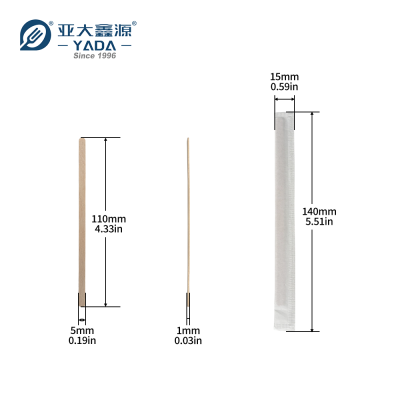
| YDCS-110 | 110 × 5 × 1 mm | Most-ordered wooden size, standard cafe cups |
| YDCS-140 | 140 × 5 × 1 mm | Most-ordered wooden size, taller takeaway cups |
| YDCS-178 | 178 × 6 × 1.5 mm | Most-ordered wooden size, cold cups and cocktails |
| YDCS-190 | 190 × 5 × 1.3 mm | Long size, requested occasionally |
| YDCS-90V | 90 × 9 × 1.35 mm | Automatic coffee vending and dispensing machines |
| YDCS-105V | 105 × 9 × 1.35 mm | Automatic coffee vending and dispensing machines |
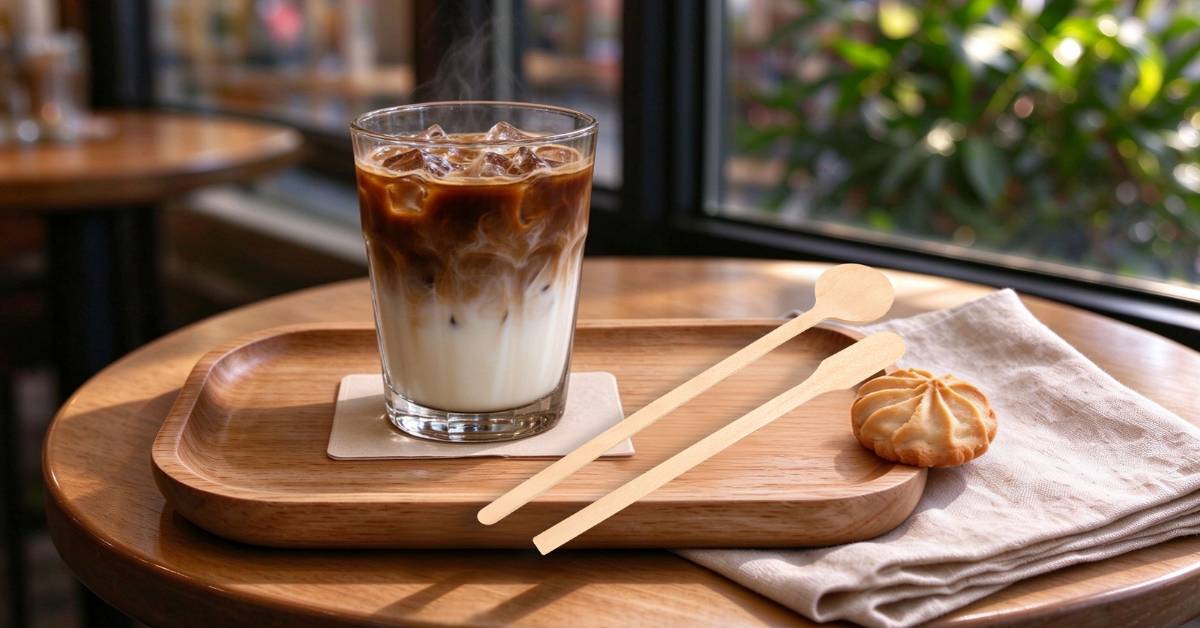
Length
Test with your own cups and lids before you choose. A stirrer that is too short disappears into the cup; one that is too long can stop a lid from closing. Takeaway cups, self-service counters and vending machines each have different needs. If you supply an automatic dispenser, check the dispenser model first, because machine sizes are made for specific dispenser designs.
Width and thickness
These affect how rigid the stirrer feels, how it sits in the hand and how it passes through a dispenser. For round or irregular heads, define where head width and neck width are measured, so nobody has to guess.
Tolerances
Ask what variation is realistic for your shape and write it down, for example "length 140 mm ± [agreed tolerance]." Agree how it will be measured and what happens to goods outside it. This protects both sides: it turns an argument about opinions into a measurement.
Approval
Keep the final dimensions on a one-page specification with a version number, together with a signed reference sample or drawing. Then you and the supplier are always working from the same version.
05 Which Shape, Edge and Surface Finish Details Should Be Confirmed?
Choose the head shape, define both ends, and replace "smooth finish" with criteria you could check with your own eyes.

Shape
Flat-end, round-head, rounded-end and irregular heads are all possible, depending on the manufacturer. Check straightness, consistency from stick to stick, and fit with your dispensers and packaging. Ask which profiles are standard and which need a new mold, because that decides both cost and timing. Round-head models for cafés are already a standard line, for example these round-head disposable wooden stirrers.
Edges and ends
Specify the shape of each end and whether both should match, and say what you will not accept: sharp corners, rough edges or irregular profiles.
Surface finish
"Smooth finish" can mean different things to different people. Describe the defects you will not accept (splinters, burrs, cracks, rough patches), keep photos or boundary samples, and ask which inspection items the supplier applies to your exact stirrer.
Test the sample the way your customer will. Stir a hot drink, close the lid, run it through the dispenser, hold it the way a customer would. If something bothers you now, it will bother you across 100,000 pieces. Also ask early what samples cost: whether standard-size samples are free, and what custom samples and molds involve (see the process table below).
06 What Customization and Branding Should Buyers Finalize Before Manufacturing?
Confirm feasibility before you lock artwork or promotional plans, and ask what customization changes in MOQ, sampling and lead time. Customization is where surprises tend to hide.
Custom shapes
A special head shape usually starts from a drawing or sample, and may need a mold and a sample round before mass production. Ask for a 2D or 3D drawing to approve before anything is made. For a sense of what is available, YADA Industrial's custom coffee stirrer service works from a drawing or sample, and its catalogue lists ten head-shape models between 105 and 180 mm.
Logo and branding
Decide whether branding goes on the stick, the packaging or both, and ask which methods the supplier offers. YADA Industrial, for example, offers hot stamping or laser engraving on one or both sides of the stick, and printing on paper wraps, labels or boxes. Send artwork files, specify placement and approve a sample before production.
Be realistic about minimums
MOQ for custom work is often higher than for standard sizes. At YADA Industrial, standard sizes start from one carton (10,000 pieces), while custom logo or custom-shaped stirrers start at 100,000 pieces per design, with sample and mold fees paid in advance. If your volume is below a supplier's custom MOQ, ask whether a standard size with custom-printed packaging would meet your goal. You may not need a custom shape at all. Whatever you choose, avoid changing the design after production has started.
07 What Quality Control and Food-Contact Requirements Should Buyers Agree on in Advance?
Tell the supplier where the product will be sold, ask which documents cover your exact product, and agree on inspection criteria and what happens when something fails, while changing course is still free.
Destination market
Food-contact rules depend on where the product is sold. In the EU, Regulation (EC) No 1935/2004 is the framework for food-contact materials, and member states may add national requirements. In the US, food-contact materials fall under FDA rules. Tell your supplier the destination country and how the stirrer will be used (hot beverage, cold drink, cocktail).
Documents
Ask for them before you order, not after. Check what each document actually covers: the species, the size, and any printing or coating. A certificate or test report for one product does not automatically cover another, and it is worth confirming that the paperwork meets your destination market's requirements. YADA Industrial provides relevant quality and compliance documentation for applicable products on request, and its certificate page lists its current certificates and test documents.
Inspection criteria
Agree what is checked (dimensions, shape, surface defects, appearance), how samples are drawn from the batch, and what counts as pass or fail. Decide in advance how nonconforming goods will be handled, and what batch identification or traceability records you need.
08 What Packaging Specifications Must Be Confirmed Before Bulk Production?
Decide how the stirrers will be packed, how many go in each pack and carton, what is printed where, and when artwork must be approved. Printed packaging has its own lead time and is easy to leave until last.
Think about where the stirrers will end up. A café counter, a vending machine, a retail shelf and a warehouse each need different packing. Common formats are individual paper wrapping, bulk PE or OPP bags, kraft or white boxes, dispenser boxes and bundle packing for machines. For scale, YADA Industrial packs standard stirrers 1,000 pieces per inner pack and 10,000 per carton, and machine-size stirrers 2,500 per inner pack and 20,000 per carton.
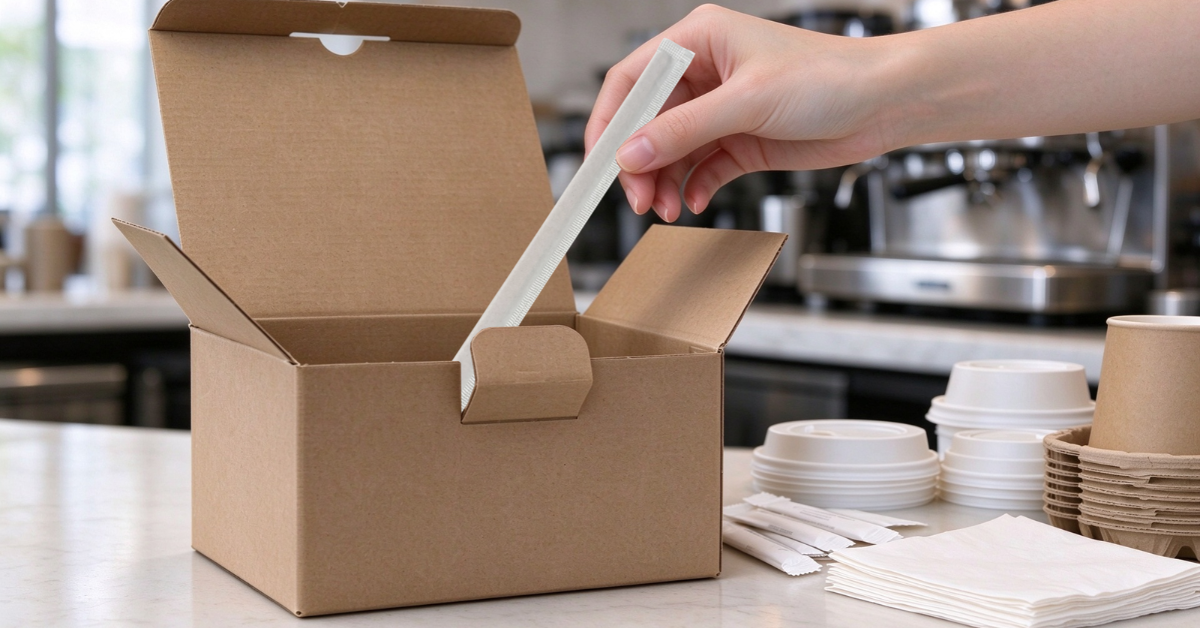
- Pack configuration. Pieces per bag, box and carton, whether you need individual wrapping, and whether different sizes or designs should be packed separately.
- Materials and artwork. Packaging dimensions and materials, printed artwork, private-label designs, labels and barcodes where relevant, and the artwork approval deadline.
- Cartons and shipping. Carton quantity, dimensions and shipping marks, and whether the packing suits your storage, handling and distribution.
Tip: put packaging approval into the production schedule, so it never becomes the thing that holds the order up.
09 How Can Buyers Avoid Delays With MOQ, Lead Time and Delivery?
Confirm the MOQ for each specification, break the timeline into stages, and count backward from the date the goods must reach you, not the date they leave the factory.
MOQ and quantity
Ask whether each size, design and packaging configuration has its own minimum, and confirm your final quantity before planning starts. Separate minimums can change how you split an order.
The complete timeline
A quoted lead time can hide a lot. YADA Industrial's published custom process is a useful example of the stages to ask any supplier about:
| Stage | What happens |
|---|---|
| 1. Requirements and estimate | Customer provides drawings, requirements or samples; price is estimated; sample and mold fees are paid in advance |
| 2. Drawing | Drawing is prepared and confirmed in 2D or 3D, then an accurate quotation is issued |
| 3. Mold and first sample | Mold is made; the first sample follows within 3 to 20 days after the mold is completed |
| 4. Sample approval | Customer inspects the sample and gives feedback |
| 5. Mass production | Starts once the sample is confirmed |
| 6. Inspection | Finished goods are checked against requirements |
| 7. Shipping | Arranged once inspection is passed and the customer confirms the goods can ship |
Ask every supplier when the clock starts and what must be ready first. That one question clears up a lot of misunderstandings.
Work backward from arrival
Start with the date the goods must be in your hands. Subtract transit, packing, inspection, production and approvals, then add a margin for logistics disruption. Set your own deadlines for artwork and sample approval: those are the steps you control, and they are easy to miss.
Plan production and logistics together
Ask whether a special shape, logo or printed packaging adds steps, agree how specification changes affect the schedule, and agree how delays will be communicated. Confirm the production schedule and shipping options before you commit to a delivery deadline, and compare transport methods on time, cost and service level.
10 Real-World Example: Meeting a Promotional Deadline for Custom Coffee Stirrers
If you are working to a fixed date, this example shows what a coordinated plan can look like, and how little slack there was.
In one YADA Industrial project, a Hungarian retail buyer needed 100,000 custom round-head coffee stirrers, packed in 10 cartons, as promotional giveaways for a September 10 event. The buyer sent the inquiry on August 15. A custom order of this size normally takes about 15 days of production, so YADA Industrial re-planned it into a 10-day production plan counted from drawing confirmation, and started freight quoting while production was running. YADA Industrial then laid out air and international courier options with different transit times and costs, and compared the four major international couriers to find the best-value route. The goods reached Hungary 20 days after the order, five days before the September 10 deadline.
What you can borrow from it:
- Settle the specification fast. Round head, quantity and design were confirmed from the drawing at the start.
- Run production and logistics in parallel. Freight options were quoted while the goods were being made.
- Compare transport early. Once the hard deadline was known, both sides could weigh speed against cost with real numbers.
One caution: the 10 days started at drawing confirmation. A brand-new shape that still needs a mold and a sample approval has additional steps first, as the process table above shows.
11 How Should Buyers Evaluate a Custom Wooden Stirrer Manufacturer Before a Bulk Order?
Ask about your exact specification, not the catalogue: can they make it, how do they check it, will production match the sample, and how will they tell you if something slips?
Questions worth asking any supplier:
Capability
“Can you make my exact dimensions and head shape, at my quantity, in my timeframe?” Ask about processes and capacity for that product, not in general.
Quality control
“What do you inspect at the material stage, during production and at the end? How do you record defects, and how do you hold the specification on repeat orders?”
Sample to production
“Will you keep the approved sample and specification version on file, and ask for my approval before any change to a critical specification?” Keep your own reference sample too, with measurable acceptance criteria.
Communication
“Who coordinates production, packing and shipping, how will you report progress, and are you planning to my arrival date or only to the production-complete date?”
A supplier who cannot say when the quoted lead time starts, or which documents cover your product, is giving you useful information before you have paid anything.
12 What Should Buyers Confirm Before Approving a Custom Wooden Stirrer Order?
Save this list as your specification sheet and ask your supplier to confirm each line in writing.
- Application and market
Intended application and destination market.
- Wood and material
Wood species and material requirements, including any FSC® requirement.
- Finished dimensions
Finished length, width and thickness.
- Tolerances
Dimensional tolerances and measurement method.
- Shape and surface
Shape, end design, straightness and surface finish.
- Approved reference
Approved sample or technical drawing, with version number.
- Branding
Logo, printing and customization requirements.
- Food contact
Food-contact requirements and the documents that cover your product.
- Inspection
Inspection criteria and acceptance procedure.
- Packaging
Packaging configuration, artwork and carton labelling.
- Quantity
MOQ and total order quantity.
- Approval deadlines
Sample and artwork approval deadlines.
- Production schedule
Production lead time and inspection schedule.
- Delivery
Required delivery date and shipping arrangements.
- Change control
Procedure for handling changes and potential delays.
Practical recommendation: one approved sheet and a written schedule protect both sides. If a supplier hesitates to confirm them in writing, it is better to learn that before mass production begins.
13 Frequently Asked Questions About Custom Wooden Stirrers
What specifications should buyers confirm before ordering custom wooden stirrers?
Material, dimensions, tolerances, shape, surface finish, customization, packaging, quality criteria, order quantity and delivery date. Put them on one specification sheet and get it approved by both sides before production starts.
Can wooden coffee stirrers be customized in length and shape?
Yes, within what the factory can produce. Ask about feasibility, tolerances and sample steps before you place a bulk order; a custom shape usually needs a drawing, a mold and a sample approval. As an example, YADA Industrial's standard models run from 73 to 190 mm, and its custom shapes are built from a drawing or sample.
Is there a standard size for wooden coffee stirrers?
No. The right size depends on your cup, lid and dispenser, so test with your own. As a reference point, YADA Industrial's most-ordered wooden sizes are 110, 140 and 178 mm long (5 to 6 mm wide, 1 to 1.5 mm thick), with 90 and 105 mm machine sizes (9 mm wide, 1.35 mm thick) for automatic dispensers.
How can buyers keep quality consistent in bulk orders?
Approve a representative sample, write measurable specifications, set inspection criteria and keep a reference sample. Agree in advance how deviations will be reviewed, so no change reaches production unapproved.
Does customized packaging affect MOQ and lead time?
It can. Printed wraps, labels and boxes need artwork approval and may add steps or their own minimums, so ask for the minimum and lead time of each variant. For comparison, YADA Industrial's custom logo or shape orders start at 100,000 pieces per design, against one carton of 10,000 pieces for standard sizes.
How long does it take to manufacture custom wooden stirrers?
It depends on quantity, design complexity, approvals and capacity. As one example, in YADA Industrial's published custom process the first sample follows within 3 to 20 days after the mold is completed, and a 100,000-piece custom order normally takes about 15 days of production (10 days in the rush case above). Ask for a schedule that separates production from transport.
How can buyers make sure wooden stirrers arrive before a promotional deadline?
Count backward from the date the goods must reach you, allow time for sampling and approvals, confirm the production schedule, and compare shipping options early. Plan production and logistics in parallel rather than one after the other.
What should buyers provide when requesting a quotation for custom wooden stirrers?
Your dimensions and shape (a drawing or sample if you have one), material requirements, estimated quantity, intended use, branding and packaging needs, destination market and target delivery date. The more complete this is, the more reliable the quote.
14 Conclusion: Confirm the Specifications Before Production Starts
Three habits keep custom stirrer orders on track:
- Write it down. Dimensions, tolerances, head shape, surface quality and packaging should be measurable and on paper.
- Approve before mass production. Sample, customization and packaging are far cheaper to change before production than after.
- Count backward from your arrival date. The date that matters is when the goods reach you.
Use this checklist with any supplier you are considering, including us. If another supplier fits your project better, the checklist will show that too. If YADA Industrial is on your list and you are planning a custom wooden stirrer order, send your required dimensions, design, quantity, packaging preferences and target delivery date to wood@chinawood.com or through the contact page, and our team can discuss feasibility, sampling requirements and production planning with you.
Send us your dimensions, head shape, quantity, packaging preference and target delivery date. We will confirm feasibility, sample steps and a production schedule against your arrival date.
Request a quotationSee standard sizes15 Related Coffee Stirrer Ranges and Reading
- Guide to wooden coffee stirrer dimensions: which size fits your cup
- Stop losing money on bad stirrers: quality, compliance and branding
- Wholesale coffee stirrers: quality issues and plastic bans
- Is your coffee stirrer elevating or eroding your brand experience
- Certificates and test documents
- Purchasing and shipping FAQ