How to Find a Custom Wooden Coffee Stirrer Supplier in China for European Coffee Brands
Takeaway and delivery coffee keeps expanding across Europe, and demand for custom wooden coffee stirrers grows with it. For a coffee brand, a foodservice distributor or a private-label retailer, buying from China is rarely a price decision. It is a specification decision. Wood species, dimensions, surface finish, food-contact documents and delivery dates all decide whether a bulk order arrives usable. A few tenths of a millimetre in thickness — or a batch that does not match the approved sample — is enough to spoil a launch. This guide sets out what to confirm, what to check and what to document before you place a bulk order. Approve a physical sample, lock the specification in writing and agree the acceptance criteria before you confirm the purchase order. Price, lead time and packaging are all negotiable afterwards. A wrong specification is not. Chinese manufacturers cover the full range of disposable stirrer formats, and the range is wider than most buyers expect on a first quotation: The same size lines usually run in both birch and bamboo, so a buyer can change material without redesigning the packaging. The wooden coffee stirrer range and the wider disposable wooden and bamboo cutlery list the current sizes and packing matrix. Working directly with the manufacturer matters here, because every one of those options is a tooling or setup decision. An intermediary can quote all of them; only the factory can tell you which ones it can hold consistently at volume. For a coffee brand, a stirrer is a small, cheap, highly visible brand surface. Buyers who move beyond generic stock usually want some combination of: An experienced OEM supplier coordinates artwork, printing, wrapper material, carton specification and production schedule as one job. That single point of coordination is worth more than a marginally lower unit price, particularly on repeat orders where any change must be mirrored across packaging and logistics. Custom logo and custom-shape stirrers are a separate production setup from standard sizes, with a correspondingly higher minimum: currently 100,000 pieces per design. For coffee chains, distributors and importers, supply stability outweighs almost everything else. A direct manufacturer gives you visibility into production scheduling, in-process inspection and order progress that an intermediary cannot provide, because the intermediary is also waiting for answers. That visibility is what determines whether you can run recurring orders, hold one specification across batches, and deliver to several distribution centres on the same date. It is also what makes a rush order possible at all: the case study in section 6 exists because the factory could re-plan its own line, not because someone promised fast delivery. Not every company advertising wooden stir sticks is a manufacturer. Some are traders; others specialise in one production stage, such as printing or wrapping. Before you send a drawing, establish which one you are talking to. A reliable manufacturer can describe its own process in sequence, without hedging: how timber is graded and kiln-dried, how strips are formed and profiled, how the surface is finished, how sticks are counted and packed, and where inspection happens between those steps. Worth confirming directly: Factory photos and equipment lists give an impression; they are not an evaluation. Ask for a live video walk-through of the line that will actually run your order, and ask how the factory handled its last three problem orders. The answer to the second question is more informative than the first. Wood is a natural material. Species, growing conditions, drying method and storage all shift the finished product, and those shifts appear as colour variation, warping or splintering — the three failure modes buyers complain about most. Birch is the default for disposable wooden stirrers in Europe: fine, uniform grain, a pale colour that reads as clean next to a white cup, and predictable machining at 1 mm thickness. That is why the standard 110 × 5 × 1 mm, 140 × 5 × 1 mm and 178 × 5 × 1 mm profiles are almost always birch. When you evaluate a supplier, confirm: Two stir sticks that look identical in a photograph can behave differently in a cup. Request samples made from the production material, not from a display set. Both materials run on the same size lines, which makes this a genuine choice rather than a constraint. Choose birch when batch-to-batch colour consistency and a clean, uniform grain matter most — the usual case for branded retail packs. Choose bamboo when you need more stiffness at the same thickness, or want a fast-growing material story to support the brand narrative. Neither is better. The decision usually comes down to appearance consistency, target price and the sustainability claim your brand is prepared to defend. This is where most complaints originate. A stirrer touches a beverage and a customer's hand in the same minute, so roughness, splinters, sharp edges and dimensional drift are not cosmetic issues. Five things to check: Ask what the inspection procedure actually is — sampling plan, frequency, record format — and whether those records can be released with your shipment. A supplier who can produce last month's inspection records for a comparable order is a different proposition from one who describes a procedure in the abstract. Customization should be a conversation about feasibility, not a menu. A supplier worth working with will tell you which of your ideas will run consistently and which will not, before you commit. Not every printing method suits every profile, and a design that looks strong on screen can be unprintable on a 5 mm-wide stick at production speed. Ask about print position, minimum line weight, artwork format and colour tolerance before approving anything. Incomplete specifications cause more failed orders than bad factories do. A buyer sends a photograph and asks for something like it, and thickness, edge profile, tolerance and packing are all left to the supplier's assumption. Prepare a specification sheet before you request a price. Name the species — birch, bamboo, or both as options — and state the application. If colour consistency matters for your brand, say so explicitly and attach an approved sample photograph or a physical reference. Dimensions must match the cup and the serving format. A brand running three takeaway cup sizes usually needs more than one stirrer length, and a chain using automatic dispensers needs the vending profile rather than a flat stick. Thickness and length tolerance should be stated on the order confirmation, not assumed. On thin profiles, a few tenths of a millimetre is the difference between a stiff stirrer and a limp one. Flat-head and round-head profiles are standard; novelty shapes are possible but are a tooling decision with a much higher minimum. Provide a drawing or a physical reference showing: A dimensioned drawing resolves in one exchange what a photograph leaves to interpretation. Agree what acceptable looks like before production, because wood varies. Define the colour range, the acceptable grain variation, and the defects that cause rejection — knots, stain, blue stain, chipped ends. If appearance matters to the brand, approve a physical sample under retail lighting rather than judging from a phone photograph. Provide vector artwork and confirm logo size, position and print area; printing method and colour specification; whether printing goes on the stick, the wrapper or both; wrapper material and dimensions; and the quantity per pack, per inner and per carton. Request a packaging sample or mock-up for approval. On custom logo work the current minimum is 100,000 pieces per design; individual wrapper formats carry their own minimum depending on artwork and material, so confirm both before assuming they run together. Minimum quantity in this category is lower than most European buyers expect, which changes how you plan the first order: Separate the schedule when you ask for a quotation — sample preparation, sample and artwork approval, raw material preparation, mass production, packing and inspection, freight — so you can see where the time actually goes. A quotation that gives one number for lead time hides the only part you can control: the approval loop. Product quality is only half of a European purchasing decision. The other half is documentation, and it has become more demanding in the last two years, not less. Five layers of EU law apply, and they are enforced at different points in the chain. No 1935/2004 sets the general safety principle: a food contact material must not transfer constituents into food in quantities that endanger health or cause an unacceptable change in composition, taste or smell. No 2023/2006 sets the good manufacturing practice requirements for how those materials are produced, controlled and documented. The EU has adopted specific measures for plastics, ceramics, regenerated cellulose and active or intelligent materials. It has not adopted one for wood. For wooden stirrers the requirements therefore come from national provisions — for example Germany's LFGB (Section 31) together with the BfR recommendations, Italy's Ministerial Decree of 21 March 1973, and French DGCCRF rules on materials in contact with food. This is the single most misunderstood point in the category. A supplier who sends one generic EU food-grade certificate has not answered the question. Ask which national reference the test report was produced against, and whether it covers the markets you actually sell into. Applies from 12 August 2026 and replaces Directive 94/62/EC. For individually wrapped stirrers the paper wrapper is packaging: recyclability requirements, restrictions on substances of concern including PFAS thresholds, and extended producer responsibility registration all apply to it. Ask for the wrapper material specification, a declaration on PFAS and optical brighteners, and the pack weight per unit you need for EPR reporting. Wood is a commodity covered by the EU Deforestation Regulation. It applies to medium and large operators from 30 December 2026, and to micro and small enterprises from 30 June 2027. Operators placing these products on the EU market must submit a due diligence statement including the geolocation of the harvest plots and evidence of legality — so ask for species, harvest country and region, plot geolocation, harvest date, legality documents, and whether the material sits under an FSC or PEFC chain of custody. Single-use plastic cutlery and stirrers have been banned from the EU market since 3 July 2021. Wooden and bamboo stirrers are the mainstream replacement — which is precisely why the documentation above matters more than unit price: the material change solved one compliance problem and created two others. This briefing is a purchasing reference, not legal advice; always work from the current official text of each regulation. A professional supplier can explain what each document covers and, just as importantly, what it does not. A test report is not a declaration of compliance, and neither one automatically satisfies a national requirement. Ask five questions of every document you receive: Suitable raw material can still arrive unusable if handling is poor. Evaluate how the supplier manages production-area cleanliness and separation of wood dust from packing areas, handling of finished sticks before packing, dust and foreign-matter control, warehouse humidity, and wrapper integrity and carton sealing for sea freight. For individually wrapped stirrers, confirm the wrapper is sealed on all four sides and that the pack count per inner matches what your distribution partners expect. Small mismatches here generate returns that cost far more than the product. A supplier can offer the right product at the right price and still fail you on the third order. Capacity questions are really questions about scheduling discipline. Ask how production is organised for different order sizes: The goal is not the largest stated capacity. It is a manufacturer that can allocate capacity to your order on the date it agreed, and tell you early when it cannot. Never approve a custom order from a quotation and a photograph. A proper sample approval covers dimensions and shape against the drawing, material appearance and colour, surface smoothness and edge finishing, printing position and colour, and both individual and bulk packaging. Once approved, the sample becomes the reference for the whole order. Any change after approval must be confirmed in writing with a revised delivery date — not agreed verbally on a call. Test the sample as a customer would: stir a hot drink for the time a customer actually stirs, then look at the stick again. A stirrer that feels acceptable dry can raise fibre after thirty seconds in liquid. For volume orders, agree a sampling plan — an AQL based on ISO 2859-1 is the normal reference — rather than accepting "we check every carton". A supplier should be able to state the stages as dates rather than durations. "15 days" is not a schedule; "production complete by 3 March, loaded by 6 March" is. Promotions and retail events have fixed dates, which makes urgency a normal condition in this category rather than an exception. When you raise a rush order, give the supplier five things up front: A capable supplier will assess feasibility, propose a compressed schedule, quote freight in parallel with production, and tell you which route it would not recommend. What you are listening for is a schedule with milestones, not a promise of speed. On 15 August 2026 a retail trading company in Hungary contacted YADA Industrial with a question rather than a request for quotation: "Our promotion is on 10 September. Is it too late to order?" The order was 100,000 custom round-head stirrers, 150 mm long with an irregular shaft and the buyer's own design, packed in 10 cartons. The customer supplied coffee shops and event planners, and the sticks were promotional giveaways. The date was not movable: a late delivery would have meant unused stock and a broken commitment to their own buyers. Standard production for that specification is about 15 days. Fifteen days of production plus sampling, packing and international freight does not fit a 26-day window comfortably. The shipment reached Hungary 20 days after the inquiry — five days before the 10 September deadline. The promotional commitment was met and the buyer left a positive review. The lesson for buyers is not that rush orders are always possible. It is that production scheduling, freight quoting and documentation have to run in parallel: a supplier who waits until goods are finished before pricing freight has already lost the week you needed. Use the same ten questions for each, and score the answers rather than the impression. The checklist below is the one to send to both suppliers before either of them quotes. A reliable supplier answers all ten with specifics. A supplier who answers nine with adjectives and one with a document is telling you where the risk is. Do not decide on price alone. Compare manufacturing control, documentation depth, customization limits and delivery behaviour — and price the risk of a failed batch into the comparison. A 5% cheaper stick that arrives at 0.8 mm thickness is not 5% cheaper. Standard sizes start from 1 carton: 10,000 pieces for the 110 × 5 × 1 mm, 140 × 5 × 1 mm and 178 × 5 × 1 mm profiles, and 20,000 pieces for the 90 × 9 × 1.3 mm and 105 × 9 × 1.3 mm vending sizes. Custom logo or custom-shape stirrers require 100,000 pieces per design, because they need a dedicated production setup. Yes. Standard production covers 90, 105, 110, 140 and 178 mm, with 190 × 5 × 1.3 mm available on request, and custom lengths, widths and head profiles can be produced against a dimensioned drawing. Novelty shapes and printed narrow shafts need tooling, so expect a higher minimum. Yes — directly on the stick, with the wrapper printable as well. Custom logo work starts at 100,000 pieces per design; the practical constraints are print area on a 5 mm-wide stick, minimum line weight and colour tolerance. Supply vector artwork and approve a proof before production. Birch is the standard: fine uniform grain, pale colour, predictable machining at 1 mm thickness, and better batch-to-batch colour consistency. Bamboo offers higher stiffness at the same thickness and a fast-growing material story, at the cost of more variation in node pattern. Both run on the same size lines, and FSC-certified options exist for both. About 15 days after drawing and sample approval for a standard custom order; a rush order can be compressed to 10 days when raw material is in stock. Add a few days for sampling, then 5–7 days by air or courier, or roughly 30–40 days by sea to Europe. The clock starts at sample approval, not at order placement. No. What is banned is the single-use plastic stirrer, prohibited since 3 July 2021 under Directive (EU) 2019/904. Wooden and bamboo stirrers are a permitted replacement, provided they meet the food contact requirements of the destination market — for wood that means national provisions rather than a harmonised EU measure. Untreated birch and bamboo stirrers are suitable for industrial composting where local collection accepts them. Individually wrapped stirrers are only as good as the wrapper: specify uncoated or plastic-free paper if your market requires it, and back any compostable claim on pack with test evidence such as EN 13432. Species and grade; exact dimensions with tolerances; surface and edge quality; food contact documentation matched to the destination country; wrapper specification under PPWR; EUDR due diligence data including harvest geolocation; and the inspection plan for the shipment. Confirm which national food contact reference applies, since wood has no harmonised EU measure. Choosing a stirrer supplier is not a matter of finding a factory that can produce the volume. It is a matter of finding a manufacturer that holds your specification, documents your market, and meets the date you cannot move. YADA Industrial — Dalian Yada Xinyuan Industrial Co., Ltd. — has supplied disposable wooden and bamboo tableware to international buyers for more than 30 years, including custom wooden coffee stirrers for coffee brands, distributors and foodservice operators across Europe. What that means in practice: Whether you need standard 140 mm stir sticks for wholesale distribution or 100,000 custom round-head stirrers for a branded campaign, the order succeeds or fails on the same two things: a specification that is complete, and a factory that can hold it. We will come back with a specification review, a sample plan and a quotation — including which parts of your design we would change before production.
Why source custom wooden coffee stirrers from China?
Manufacturing and customization options
Flexible OEM and private-label solutions
Suitability for wholesale and bulk procurement
What to look for in a reliable wooden coffee stirrer manufacturer
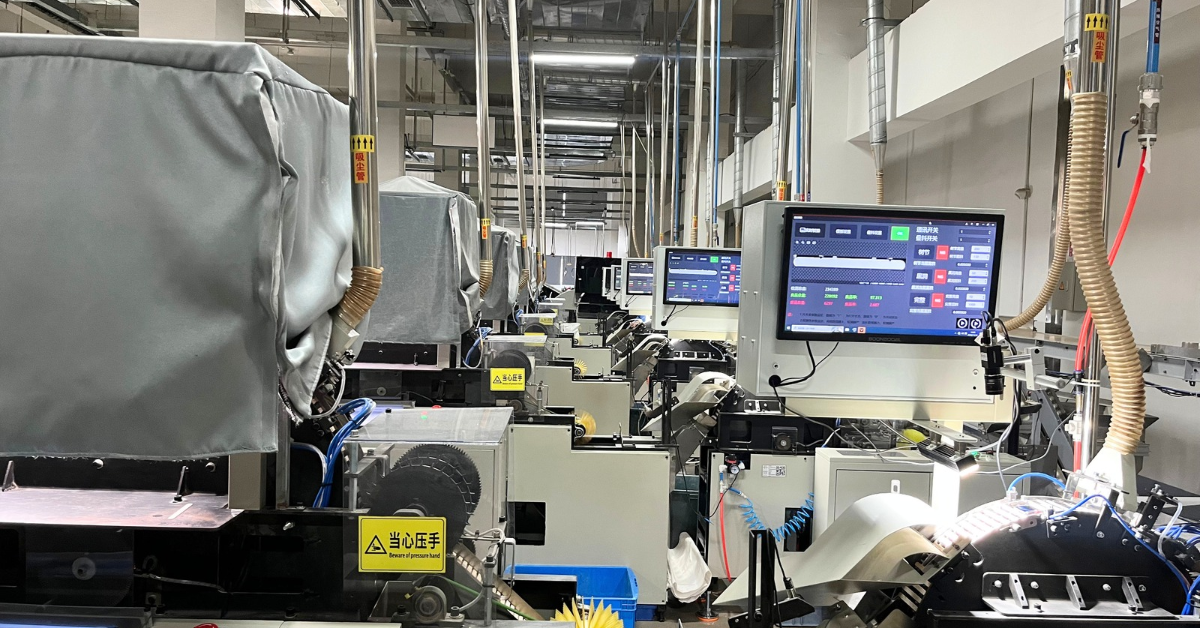
Direct factory experience and manufacturing capability
Consistent wood material quality
Birch or bamboo: which should you specify?
Attribute Birch Bamboo Grain and appearance Fine, uniform, pale Denser fibre, visible nodes, slightly warmer tone Rigidity at 1 mm thickness Good, predictable snap Higher stiffness, less flex on long shafts Colour consistency between batches Easier to control Harder to control; node pattern varies Moisture behaviour Stable when kiln-dried and stored dry Very stable, low water uptake Surface finishing Sands smooth, low splinter risk Sands well; needs sharp tooling at the nodes Typical application Flat and round-head coffee stirrers Stirrers, vending sticks, skewers Sustainability narrative FSC-certified birch available Fast-growing; FSC-certified bamboo available EUDR relevance Wood is a covered commodity Confirm HS classification with your importer Surface finishing and product quality control
OEM, ODM and private-label customization
What specifications should you confirm before ordering?
Material and wood type
Length, width and thickness
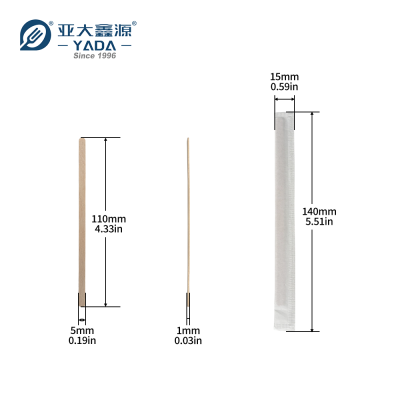
Size (L × W × T) Typical use Packing MOQ 90 × 9 × 1.3 mm Automatic dispensers, small cups 20,000 pcs / carton 1 carton 105 × 9 × 1.3 mm Automatic dispensers, 6–8 oz cups 20,000 pcs / carton 1 carton 110 × 5 × 1 mm Takeaway coffee, 8–12 oz cups 1,000 pcs × 10 bags / carton 1 carton 140 × 5 × 1 mm Takeaway and delivery, 12–16 oz cups 1,000 pcs × 10 bags / carton 1 carton 178 × 5 × 1 mm Large cups, bar and cocktail service 1,000 pcs × 10 bags / carton 1 carton 190 × 5 × 1.3 mm Long-shaft requests On request On request Shape and edge design
Surface finish and appearance
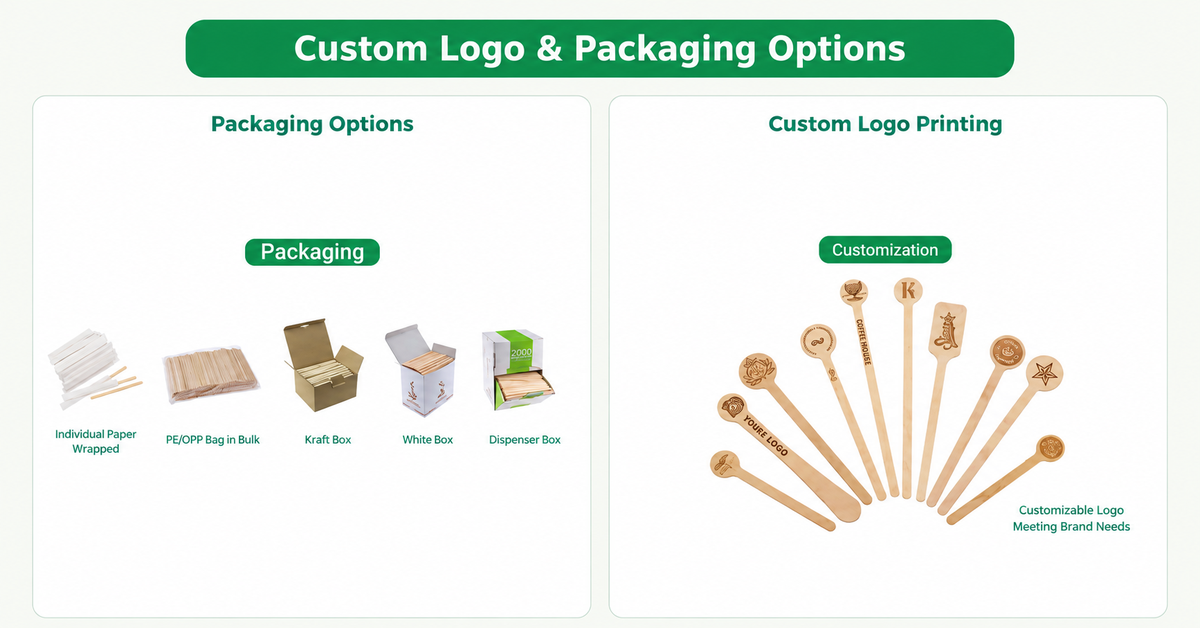
Logo printing and packaging requirements
MOQ, sampling and production lead time
How do you ensure wooden coffee stirrers meet European market requirements?
Which EU rules apply to wooden coffee stirrers in 2026?
Request the right documents, not just certificates
Document What it should tell you Declaration of compliance Which regulation, which intended use, which material Migration test report Test conditions — temperature, contact time, simulant — and the laboratory National reference LFGB, DM 21.03.1973, DGCCRF, or the standard the report was produced against Material specification Species, grade, moisture content, any coating or treatment Inspection records Sampling plan, results, batch reference Traceability Batch linkage from raw material to finished carton Packaging declaration Wrapper material, PFAS and OBA statement, pack weight per unit Hygiene and packing conditions
How do you evaluate production capacity and delivery reliability?
Confirm actual production capacity
Approve samples before mass production
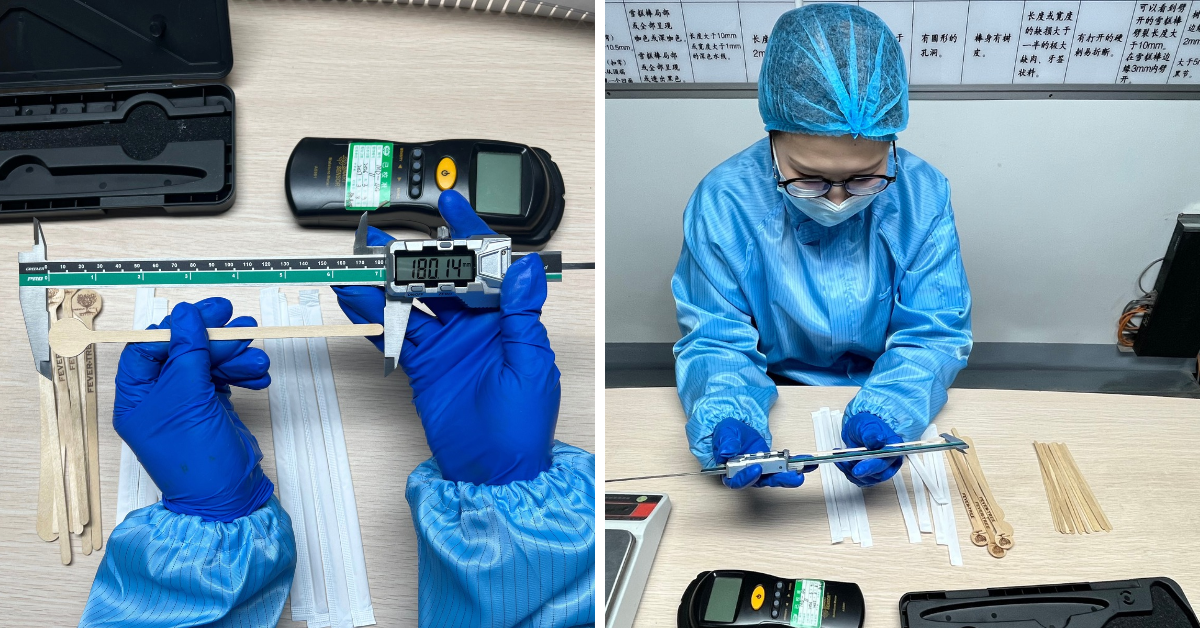
How do you inspect samples?
Inspection item What to check Dimensions Measure length, width and thickness at both ends and the middle Shape Head and overall profile against the approved drawing Surface Splinters, raised fibre, sanding marks along the full length Edges Even, no sharp arris, no chipping at the cut end Appearance Colour and grain against the approved reference Structure Cracks, splitting, bowing when held horizontally Packaging Wrapper seal, pack count, carton protection Understand the full timeline
Can the supplier handle an urgent order?
Case study: 100,000 custom wooden coffee stirrers to Hungary in 20 days
The challenge
What was done
The result
Order detail Result Product Custom round-head wooden coffee stirrers, 150 mm, custom design Destination Hungary Quantity 100,000 pieces / 10 cartons Production schedule 10 days (standard: 15 days) Total order-to-door 20 days Outcome Delivered five days before the 10 September 2026 deadline How do you compare two Chinese stirrer suppliers side by side?
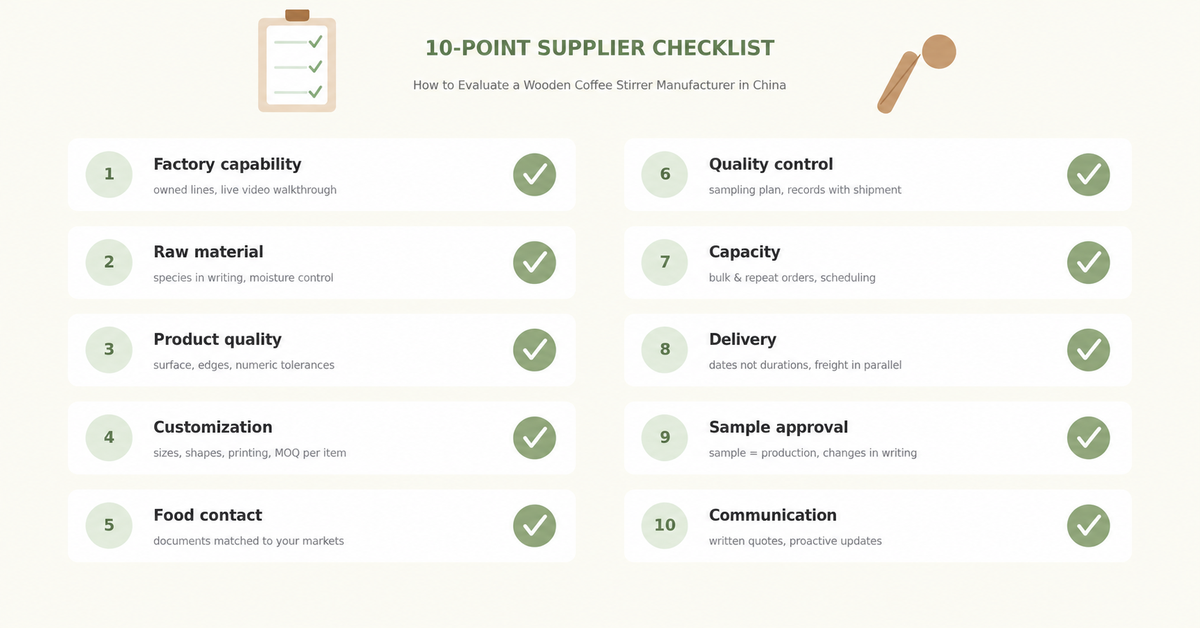
Evaluation item What to verify Factory capability Owned lines, dedicated or shared, live video walk-through offered Raw material Species named in writing, grading criteria, moisture control Product quality Surface, edges, dimensional tolerance stated numerically Customization Sizes, shapes, printing, wrappers — and the MOQ for each Food contact Documents matched to product, use and destination market Quality control Sampling plan, inspection points, records released with shipment Capacity Bulk and repeat orders, scheduling discipline Delivery Dates rather than durations, freight quoted in parallel Sample approval Sample equals production output, changes confirmed in writing Communication Written quotations, documented changes, proactive updates Frequently asked questions
What is the MOQ for custom wooden coffee stirrers?
Can I customize the length, width and shape of wooden coffee stirrers?
Can wooden coffee stirrers be printed with my brand logo?
What wood materials are used — birch or bamboo?
How long does custom wooden coffee stirrer production take?
Are wooden coffee stirrers banned in the EU?
Are wooden coffee stirrers compostable or recyclable?
What should European buyers check before importing wooden coffee stirrers from China?
Partner with YADA Industrial for custom wooden coffee stirrer manufacturing
Send your drawing, target quantity and delivery date